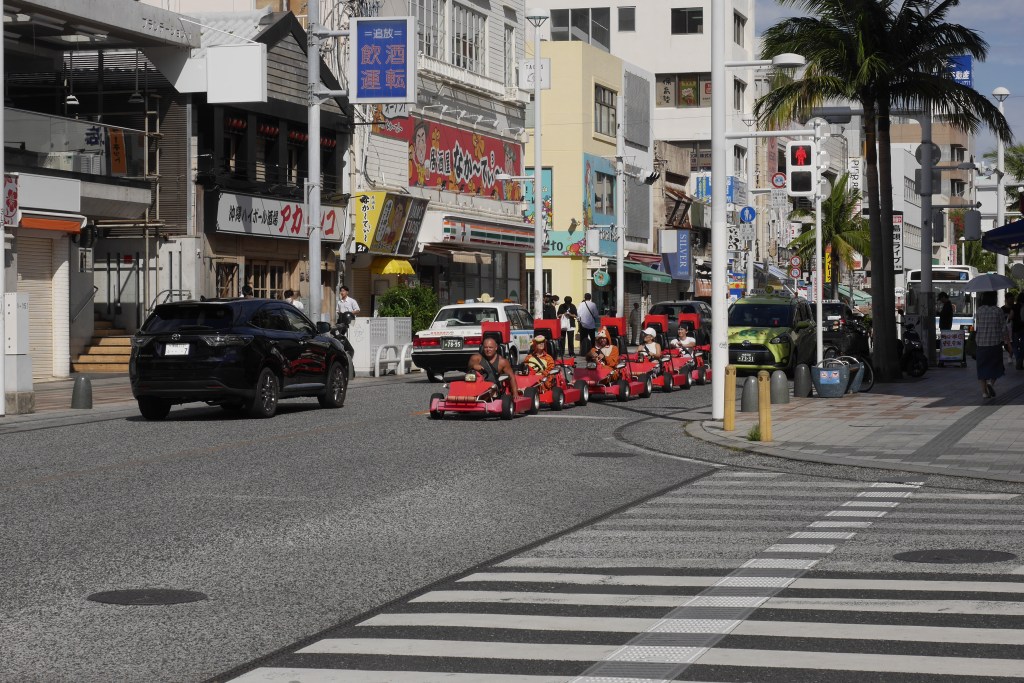
It has been an exhausting transition back from holiday mode to work. It hasn’t been helped by the eight hour time difference and illness brewing in the background. I’m picking up from where I left off last time. We’re in a rental car office in Naha, Okinawa on a beautifully sunny day…
After a couple of days exploring the biggest city in Okinawa, it was time for us to range a little farther afield. In order to get to our next stop at Mihama, we had to get a little outside our comfort zones.

Driving in Japan
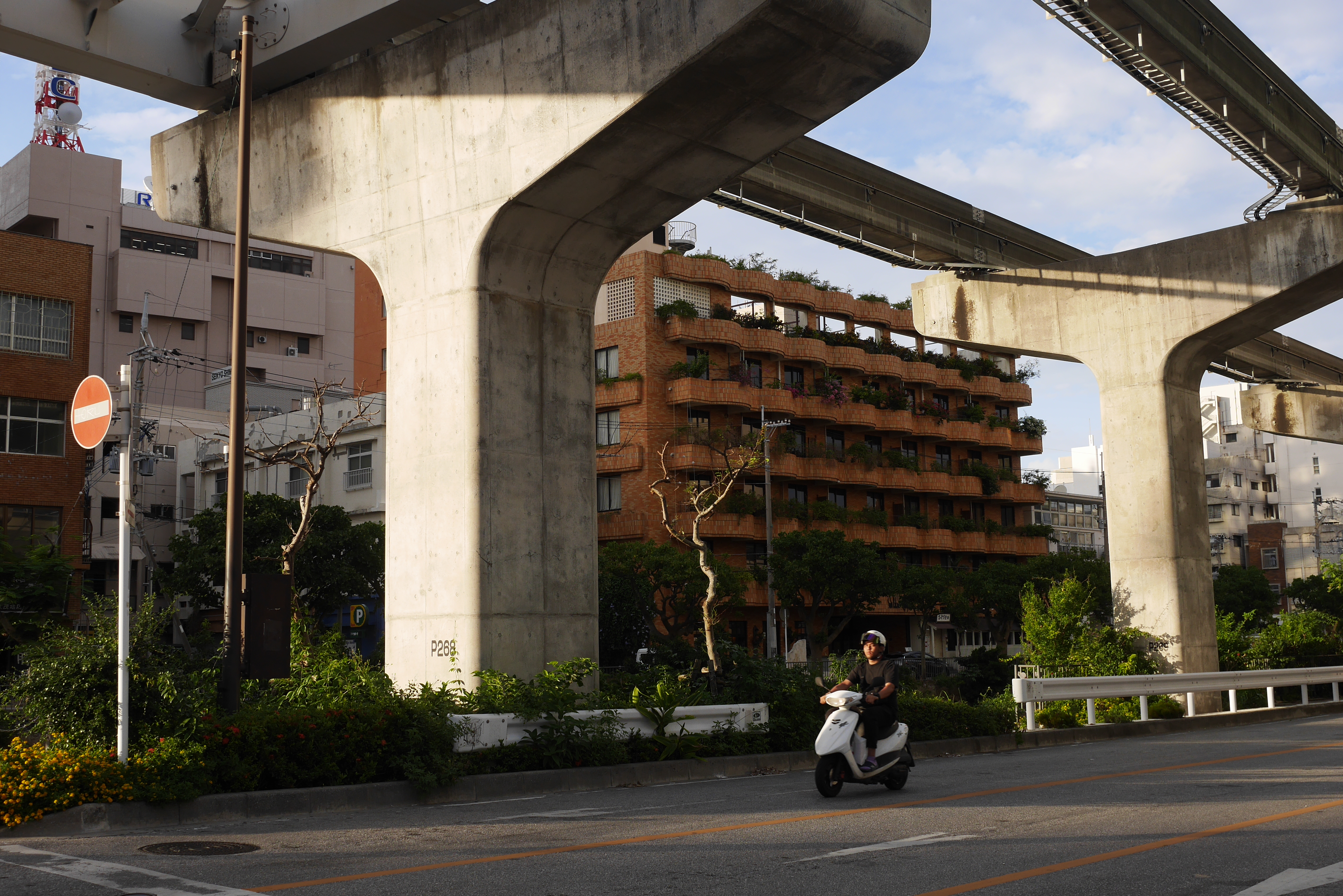
Public transport is exquisitely executed on the mainland. High speed bullet trains are ready to carry you the length of the country in comfort, while subways will get you to almost every part of the major cities. Things are a bit patchier in Okinawa. There is a monorail that travels from the airport to the main sights in Naha, but beyond that you have to rely on buses which are slower and don’t necessarily stop where you’d like them to.
Enter the car! You may have heard of it before, but it’s a versatile four-wheeled (generally speaking) machine which can get you where you need to go as long as there’s some tarmac between here you and your destination. I tend to avoid driving abroad because I’m on holiday to de-stress rather than amass road rage and navigational anxiety. Nevertheless, we decided to rent a car to add a degree of flexibility to our schedule, which helps immensely when travelling with a toddler. Waiting around at bus stops isn’t fun at the best of times, but I can tell you that the experience is not enhanced by having a flailing, tired, and tantruming child in tow.
For someone with reservations about, well, car reservations, driving in Okinawa is perfect. The staff at the rental office were very accommodating and thorough, and explained everything we needed to know. Our booking was through Alamo but ultimately it was Nippon Rent-a-Car which provided the car. They walked me around and documented any significant scratches, and explained the procedure for accident reporting. Any accidental damage to the car had to be logged with the police. Even bumps and scratches. If the UK operated that policy the police would be even more buried than they already are.
“Excuse me officer, but I brushed a hedge and now there’s a small scratch”
“Thank God you reported it when you did. That could’ve gotten ugly”
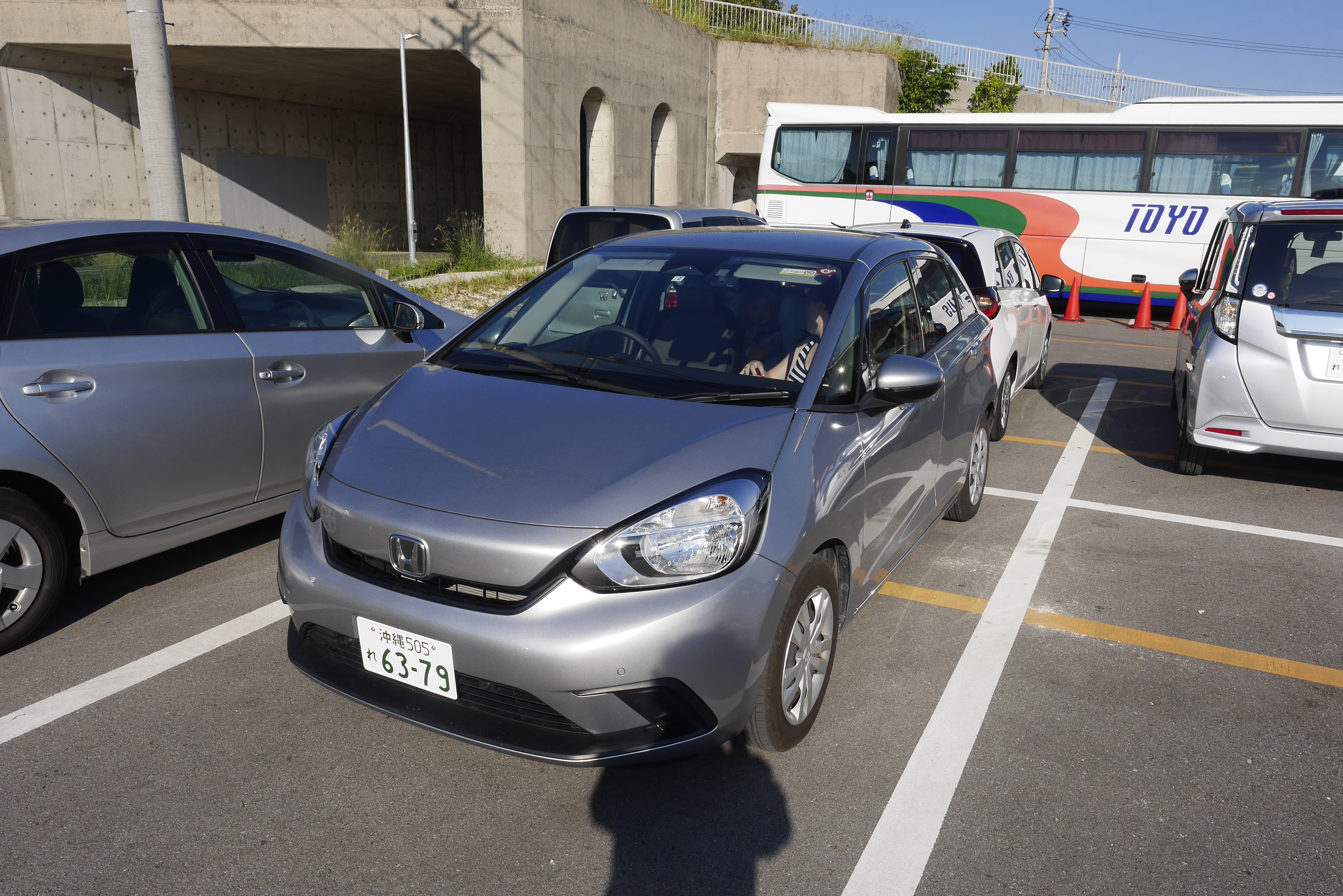
We were given a Honda Fit, and although we were a little disappointed at not getting to drive a classic Japanese box car, the Fit turned out to be perfect for us. It took all our luggage and a child seat with a little room to spare. The automatic gearbox did take some getting used to though. The car was also quite chatty and talked about right turn only lanes and cars merging from the left quite a lot.
The speed limits are a little low in my opinion. Most roads are 30-40mph and below, and the expressway is 50mph which still feels slower than it should. Good thing nobody seems to observe the speed limit then. I think they could easily raise the expressway limit to 70mph and still do so safely. The toll booths were also easy to navigate, taking a ticket on entering the relevant road and paying at the end of the stretch. They were reasonably priced too given how convenient they were.

Next to getting used to an automatic, junctions were the biggest hurdle. Coming from the land of roundabouts (Craigavon, of course) big four way intersections are quite intimidating. There are also times when the light is green for cars and pedestrians so you always have to be vigilant for people crossing. People were very civilised on the road though and we didn’t have any issues with one notable exception. It was remarkably difficult to get onto main roads from side roads and on-ramps. We’re used to waiting a bit in the UK but eventually someone feels sorry for you and flashes to let you out. Nope. We waited and waited, but on a few occasions we were forced into somewhat risky manouvres to get back onto the road.
Our first stop was about half an hour from Naha along a straight road.
Mihama American Village
Strictly speaking, this wasn’t our first stop. In reality we stopped on a street corner close to our hotel so we could collect our bags and check out of the hotel. In order to do that, we had to figure out the parking systems in Naha. There are a few different options but the spaces we landed on used an automatic ramp/bar one. You drive in and after a couple of minutes the bar rises and stops the car from leaving. When it’s time to go, you put the necessary fee into the machine nearby and the bar automatically lowers allowing the car to go. Simple but effective, and obviating the need for a traffic warden. This kind of space is everywhere in big cities but it’s not the only one. There are plenty of more sophisticated vertically oriented solutions, including a bizarrely tall car parking building opposite the Hyatt Regency in Naha which fits 113 vehicles.

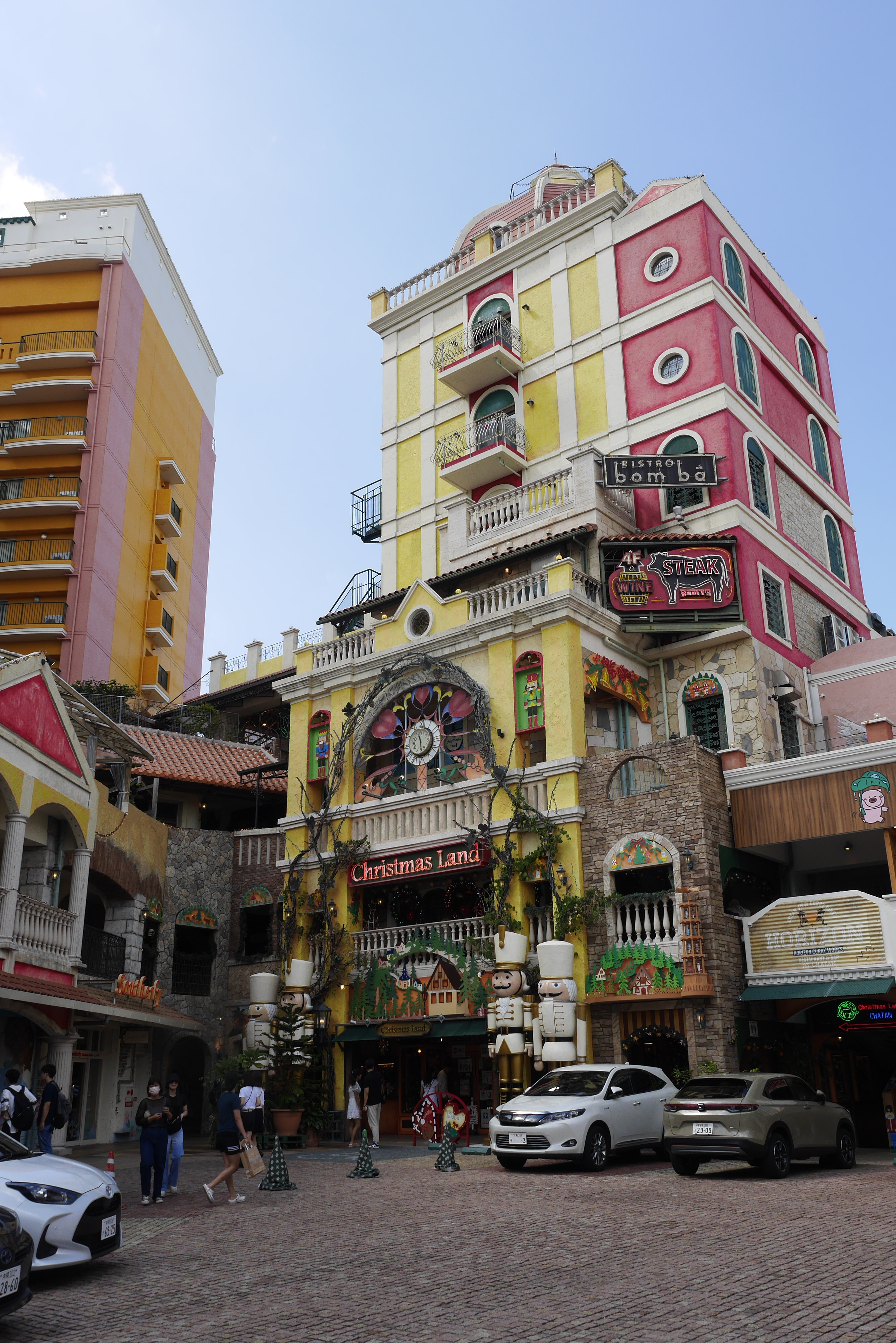
I digress. The American Village is just off the main road and perfectly located to entertain the American troops stationed on the island. There is a massive car park next to the Aeon mall which gives easy access to the rest of the attractions. The American Village feels a little like a Disney construction with an eclectic mix of themed buildings housing cafés, restaurants, shops, and bars. There are a number of American chains including Red Lobster, and it’s quite a fun place to wander around and take in the sights. We stopped off at an Italian restaurant and had some rather nice pizza before doing a bit of shopping. There’s even a Christmas shop but we were a little terrified of bumping into anything because there was aggressive warning signage everywhere. It required a swift toddler removal too as the desire to touch expensive things was too great.

The Bizarre Litter:Bin Ratio
For a place so immaculately kept, bins on the street are few and far between. There are plenty in shops and cafes but they’re conspicuously absent from street corners. For someone from a Western country we are used to bins everywhere and ubitquitous littering. There are a few reasons for this, and at least part of it might be the complex waste streams that differ throughout the provinces.
People in Japan generally don’t eat on the go. There are some exceptions, but on the whole it’s better to either eat at an establishment or your final destination. Eating on long distance trains is okay, but on commuter trains and buses it’s frowned upon. What about the rubbish? Well if you’re not eating on the go, then you’re either close to a bin or you can bring your rubbish home.
Was it always this way? Prior to the 1995 Tokyo subway sarin gas attacks, there were a lot more rubbish bins on the streets. The aftermath led to many bins being sealed and eventually removed. Most of these were never replaced but strict cultural pressure to maintain a neat and clean environment meant that concerns about an increase in littering were unfounded. The streets of Tokyo remain pristine and are a sight to behold. Many other parts of Japan are similarly tidy. Littering is considered harmful to society and people don’t do it as a result. For a country with this perspective on litter, almost everything is wrapped in multiple layers of packaging. The amount of waste is quite staggering.
The waste system can be difficult to navigate for an outsider, but Okinawa was relatively forgiving and most bins had signs explaining things. One example was PET plastic bottles which required removal of caps and labels – the bottles were for recycling, the rest for incineration. Given the lack of space for landfill, Japan has adapted by burning most of its waste using a clean and efficient method. Some of this is used to generate electricity as well.
Enough about rubbish. Here’s a photo to tide you over until the next instalment of our travels in Japan.

 Ordinary Decent Gamer
Leave a comment