
Gohan ご飯 refers to cooked rice, but in a broader sense it can mean food or any meal. And broadly speaking, this installment in the series is all about food encountered in Japan and Korea.
I have been a fan of Japanese cuisine ever since trying sushi made by my brother many years ago. He made maki (the classic sushi rolls wrapped in nori seaweed sheets) and California rolls at a time when I had relatively little experience other than with mass produced supermarket examples. Occasionally I’ll sink to the depths of a Boots meal deal sushi box, if only to establish a baseline low to contrast the outstanding food available in Japan (and even within some restaurants in the UK). Jump to my first experience in Sakura, a Japanese restaurant on Botanic avenue in Belfast, and my love of the food and culture was solidified.
Having said that, we ate almost no sushi on our most recent trip. There was some sashimi and a sushi rice bowl, but the pervasive American and broader Western influence in Okinawa extends to the food available. Some of the best restaurants weren’t serving Japanese foods, but burgers, tex-mex, and steaks.
It’s true of Okinawa, and more so in Tokyo, but you can find the highest quality versions of food from around the world here. One of the best burgers I have ever had was in Kyoto, and some of the best pizza in Nagoya. Japanese people take food seriously, and when they set out to master it, boy do they master it.
I should take a moment to debunk a common myth about travelling in Japan, too.
“How’d you manage out there? I’ve heard Tokyo/Japan is really expensive!”
Yes, you can spend thousands on an exquisite once-in-a-lifetime meal where you’re treated like royalty, overlooking Tokyo tower (a story for a different time), but you could also spend £3 and have a satisfying bowl of ramen from a vending machine joint. The same extends to accomodation – most of our hotels in Okinawa were £35-40 per night, and that is rooms or apartments with enough space for two adults and a small child. Flights are expensive because, surprise surprise, it’s on the other side of the world. Once you’re in the country, however, you’ll find every budget catered for from student to visiting dignitary.
I guess we had better start somewhere.


Traditional Fare
We had a few traditional meals while staying in a guesthouse on Aka island (Housei), which typically include rice, raw fish, some form of tofu (in this case, peanut tofu), and tempura (deep fried vegetables and fish). There can be some challenging tastes and textures, particularly with mozuku which is a kind of seaweed used widely in Okinawa.
The traditional food seemed relatively complex to prepare, and largely healthy. The opposite is true of the next category.
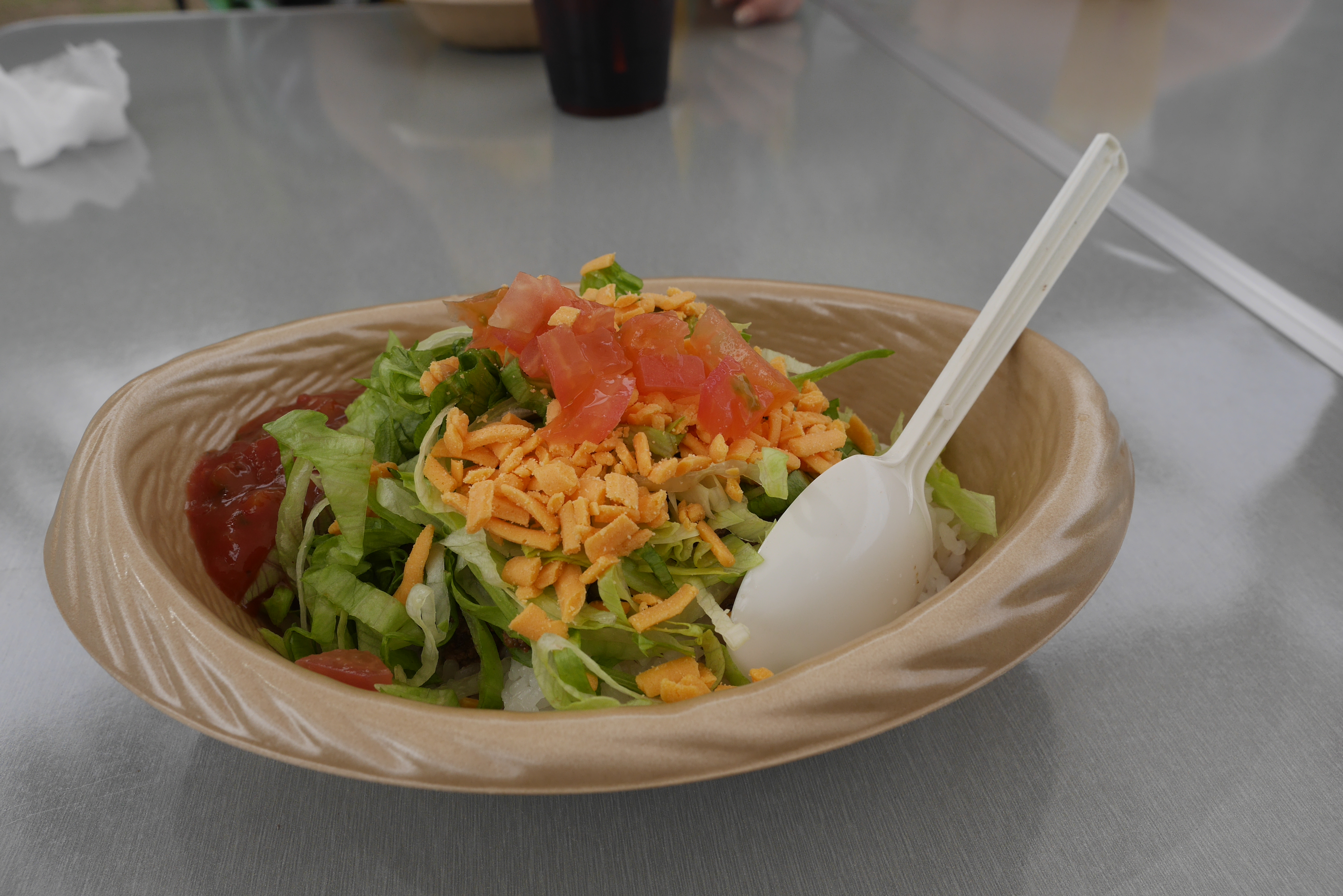


Taco Rice
Taco…rice? Two words that don’t tend to slot neatly together, but Okinawa has embraced this modern delicacy. Top steamed rice with beef mince cooked with Mexican-inspired spices, then chopped lettuce, tomatoes, and grated cheese. Then either serve salsa on the side or on top, and you’ve got yourself some taco rice. Such a simple twist on classic tacos, but one that is really filling and more-ish. See the pictures above for some examples, and one dinosaur.
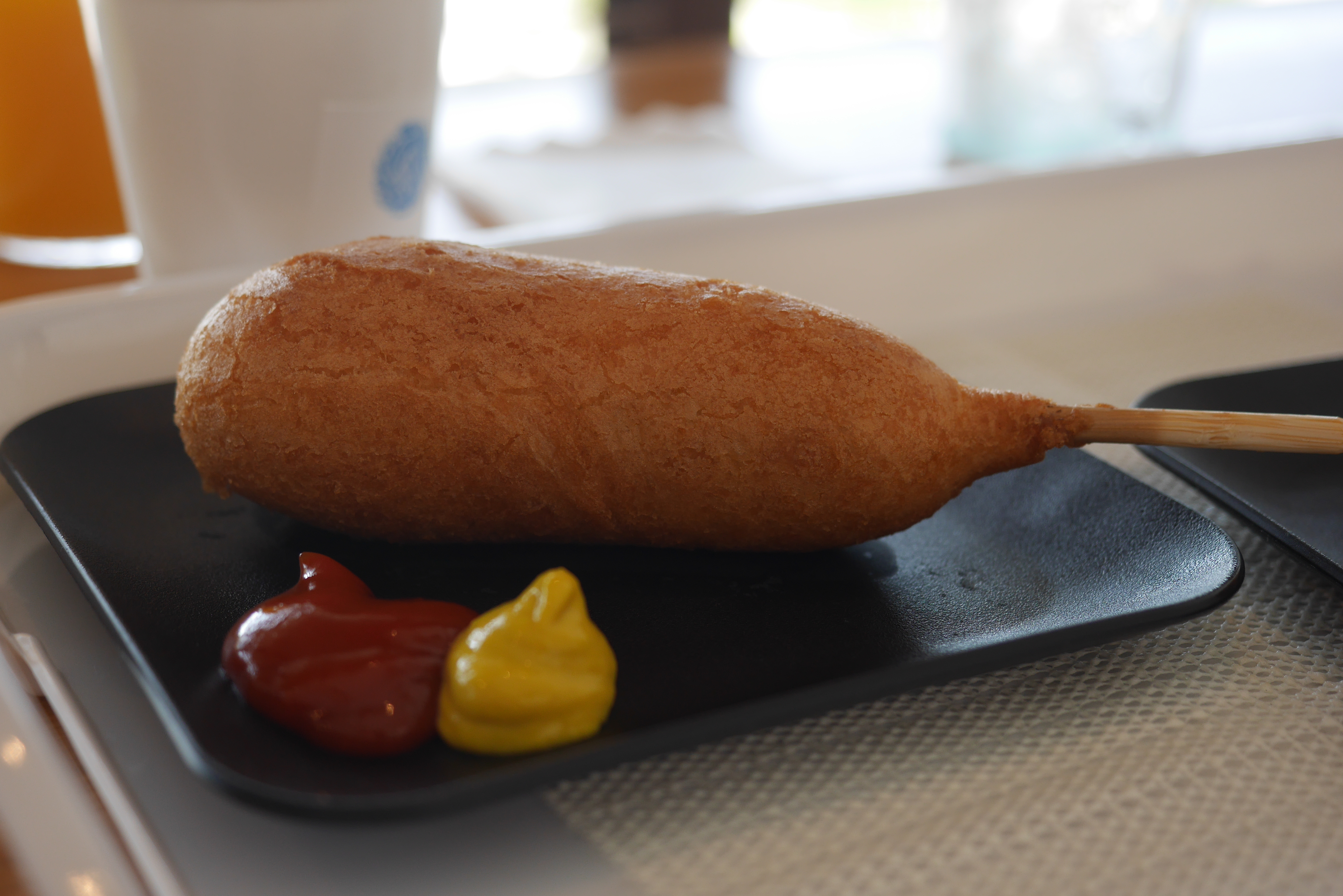
That’s not the only American delicacy that made it across the Pacific. Step into the visitor centre on Zamami island and you can pick up an iced coffee and a corn dog for an afternoon snack. Or, if all the the other businesses are closed for a holiday, it can be your breakfast, lunch, or any meal you desire. Firmly in the “food on a stick” category, the corn dog was probably the result of a mutated German sausage designed to appeal to the American palate. Thanks to the American presence on Okinawa, corn dogs have made it to even remote islands.
I got some burgers and fries…
Corn dogs aren’t the only American classic to make it onto the Okinawan islands. Burgers. It’s burgers.


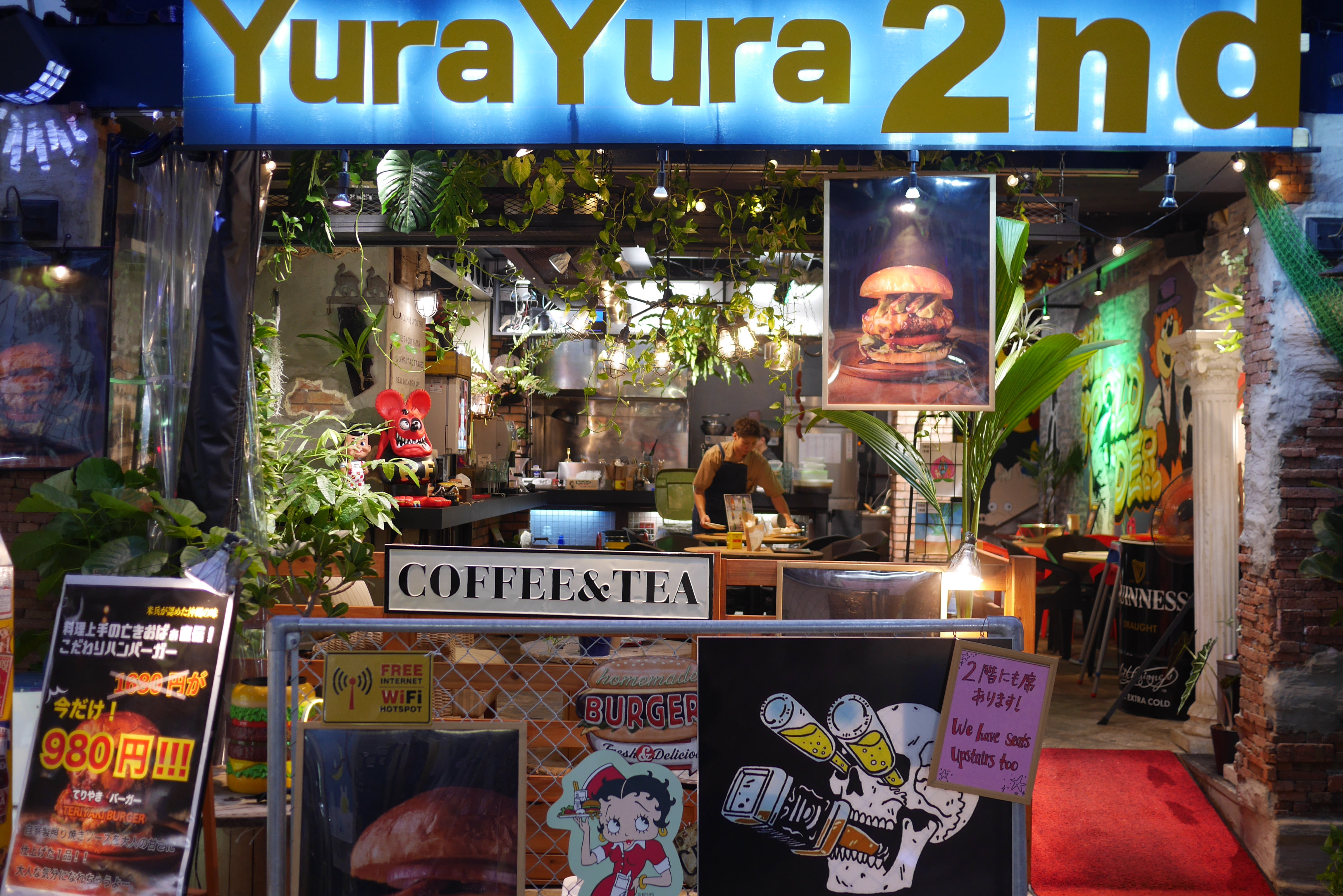

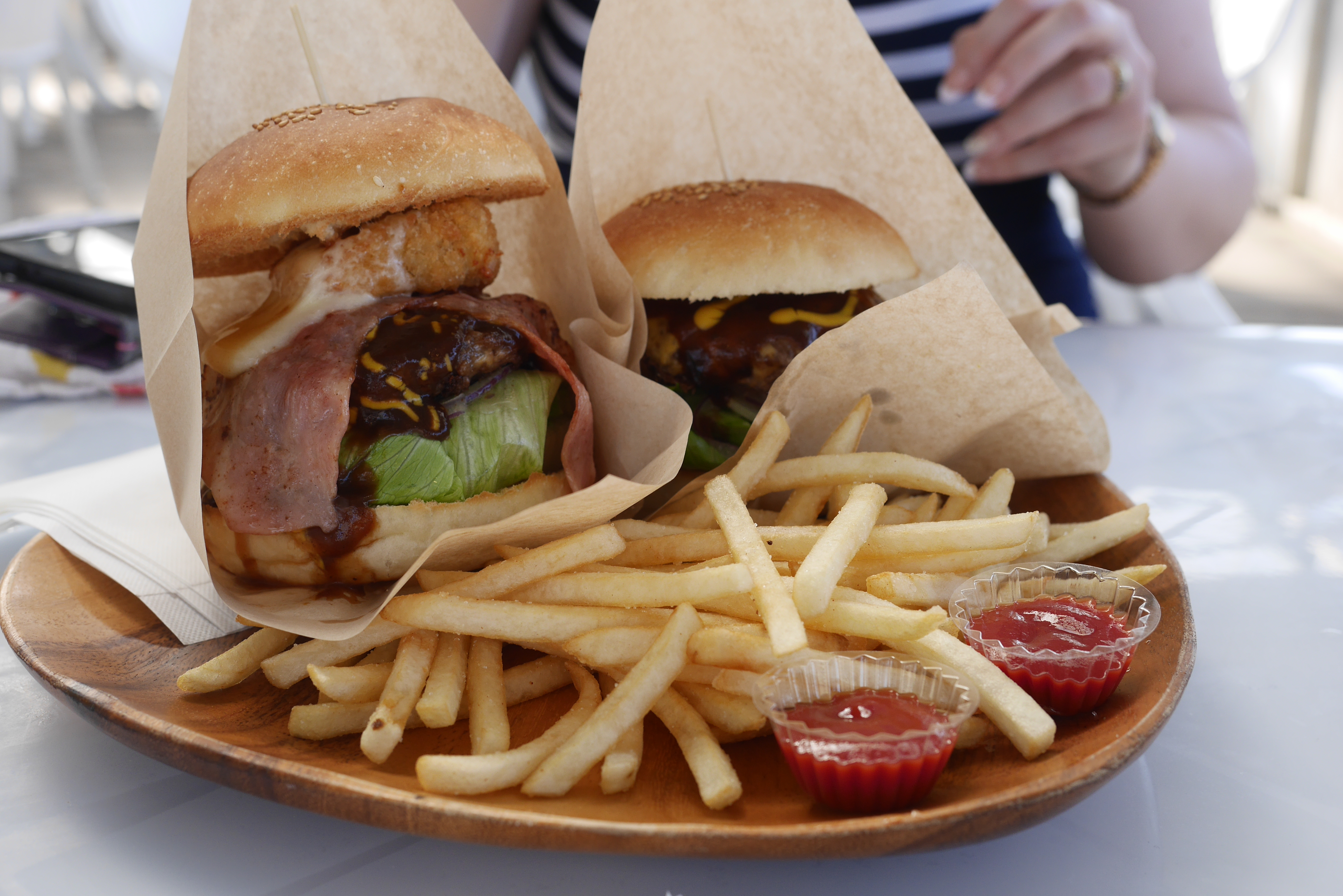
There’s not much else to say other than that. There are some fantastic burger joints scattered across the islands. These were some of the best burgers I’ve ever eaten. Given how stunning the burger from Yura Yura was, and the fact the chef was handmaking the burger patties as we sat there, it felt somewhat bizarre that it was served with a potato smiley face. The tiny burger stand in Kouri island punched well above its weight, and was worth the trip out to that tiny island at the North end of the main island.
A little bit of tradition
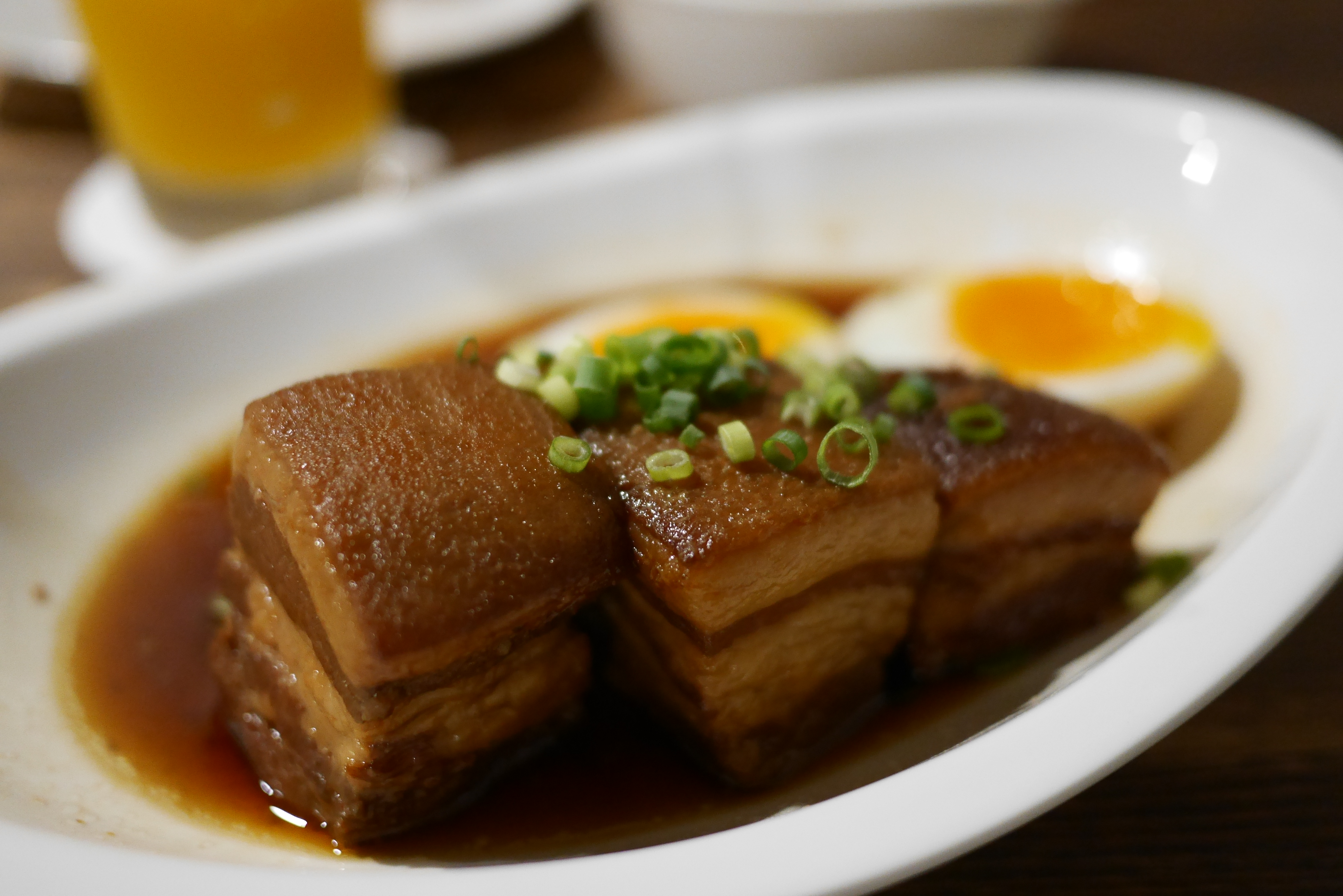
Rafute, pork belly braised in soy sauce and black sugar, is an Okinawan traditional dish which is the definition of melt in your mouth. Be sure to check if it comes with rice or a side dish though, otherwise you could end up with a lonely dish of meat and a grumbling stomach. As much as I enjoyed it, I was somewhat jealous of Sarah’s heaped plate of taco rice.
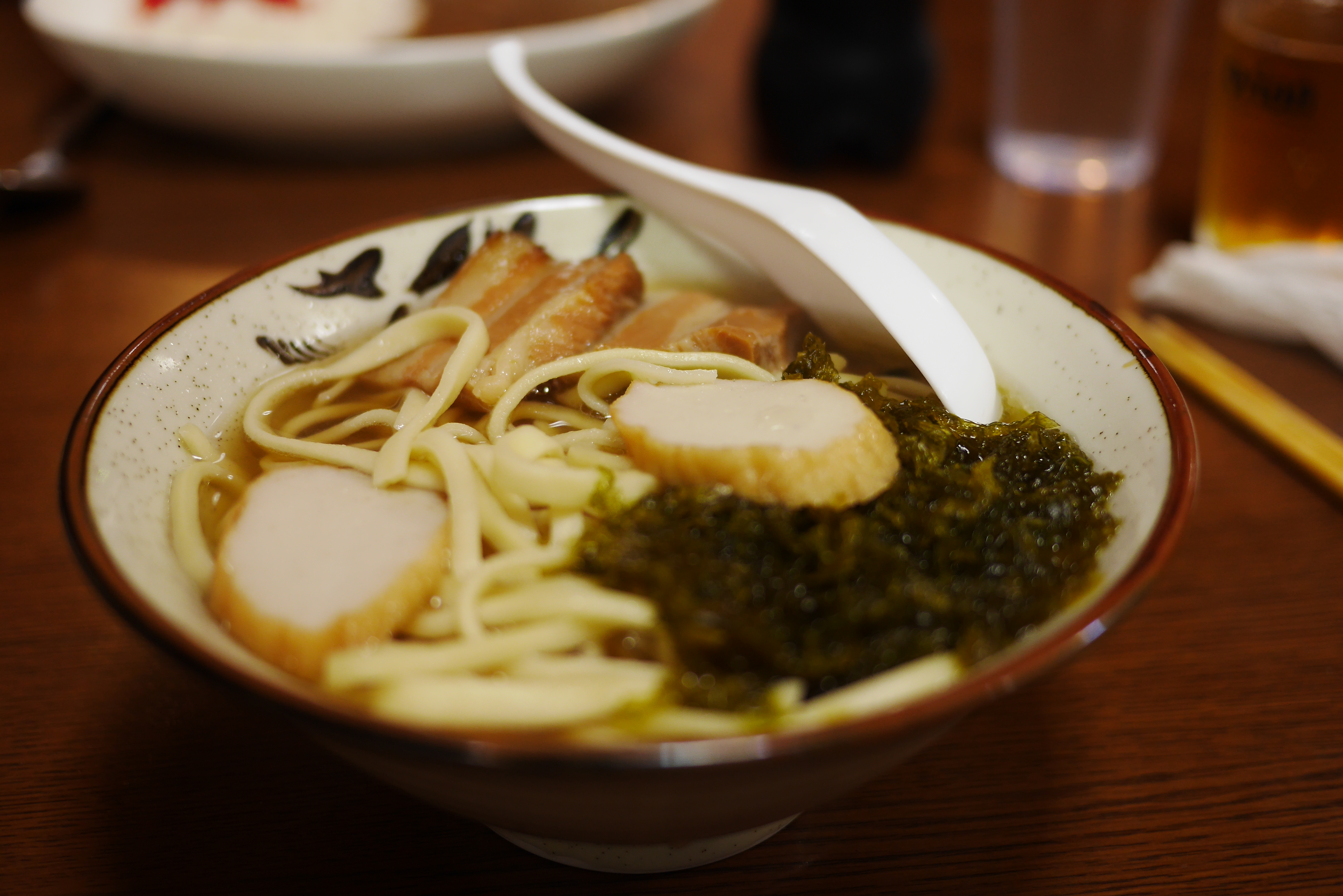
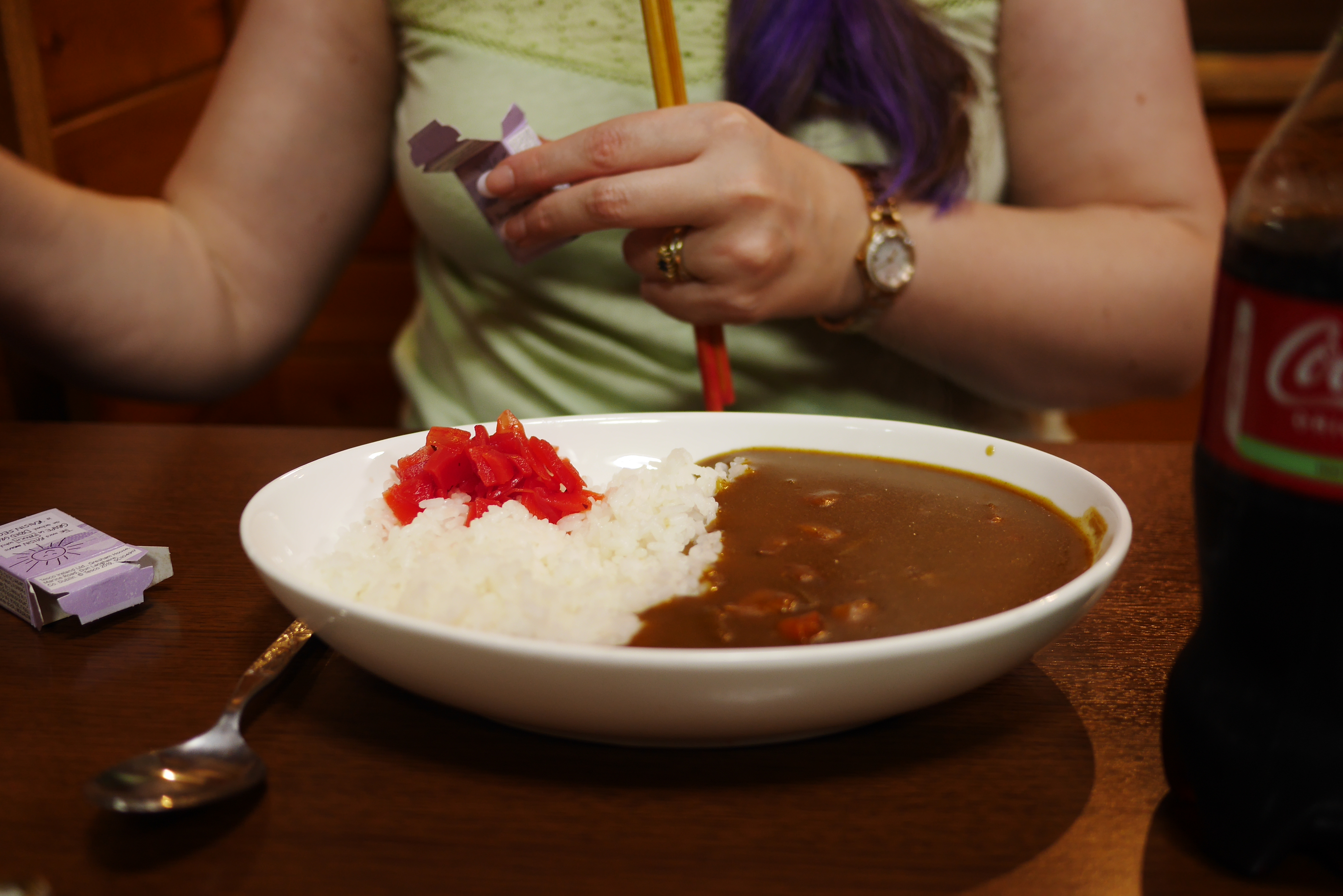
Okinawa soba is another staple, but in contrast to the mainland buckwheat soba noodles, Okinawa soba noodles are thick and made of wheat. Topped with seaweed and sliced pork belly, it’s a great healthy meal choice for lunch or dinner. Curry rice is always welcome. Japanese curry tends to be on the sweet and mild side, and is a distinct experience from Indian curries.
Cafe Culture
One of our mornings in Naha took us down an alleyway off Makishi market in search of breakfast. Sitting down with a pastry and a hot cup of coffee at 8 am wasn’t really a thing in Okinawa (save for Western-style hotels). After some wandering and desperate Google scrolling, we stumbled across a mosaic-inlaid door leading up a narrow staircase. As we crossed the threshold upstairs, it was like stepping back in time to the 70s.


Described by some reviewers as a Showa-era coffee shop, “tea dream” (crude translation as there’s no English signage) is a proper old establishment. One elderly lady does everything, and offers a simple menu including coffee, pizza toast, Neapolitan pasta, curry rice, and chiffon cake. The prices haven’t changed since the 70s either, with that massive slice of chiffon cake for around 80 pence.
There’s one slight catch. The owner doesn’t speak a word of English. My Japanese (and mostly confidence) was poor this early on in the trip, and I was struggling to speak in an intelligible manner. We just about managed to order iced coffee, curry rice, and some cake, but the order for pizza toast was lost in translation. Despite the communication barriers, she was very attentive and friendly, and even gave Evie a free rice cake. Evie couldn’t walk down a street without being given something for free. Speaking of Evie…
The Candy Apple shop
Of course there’s a candy/toffee apple shop in Japan. If it’s going to anywhere, it’s going to be here. And it had to be right in the line of sight of an almost three year old.


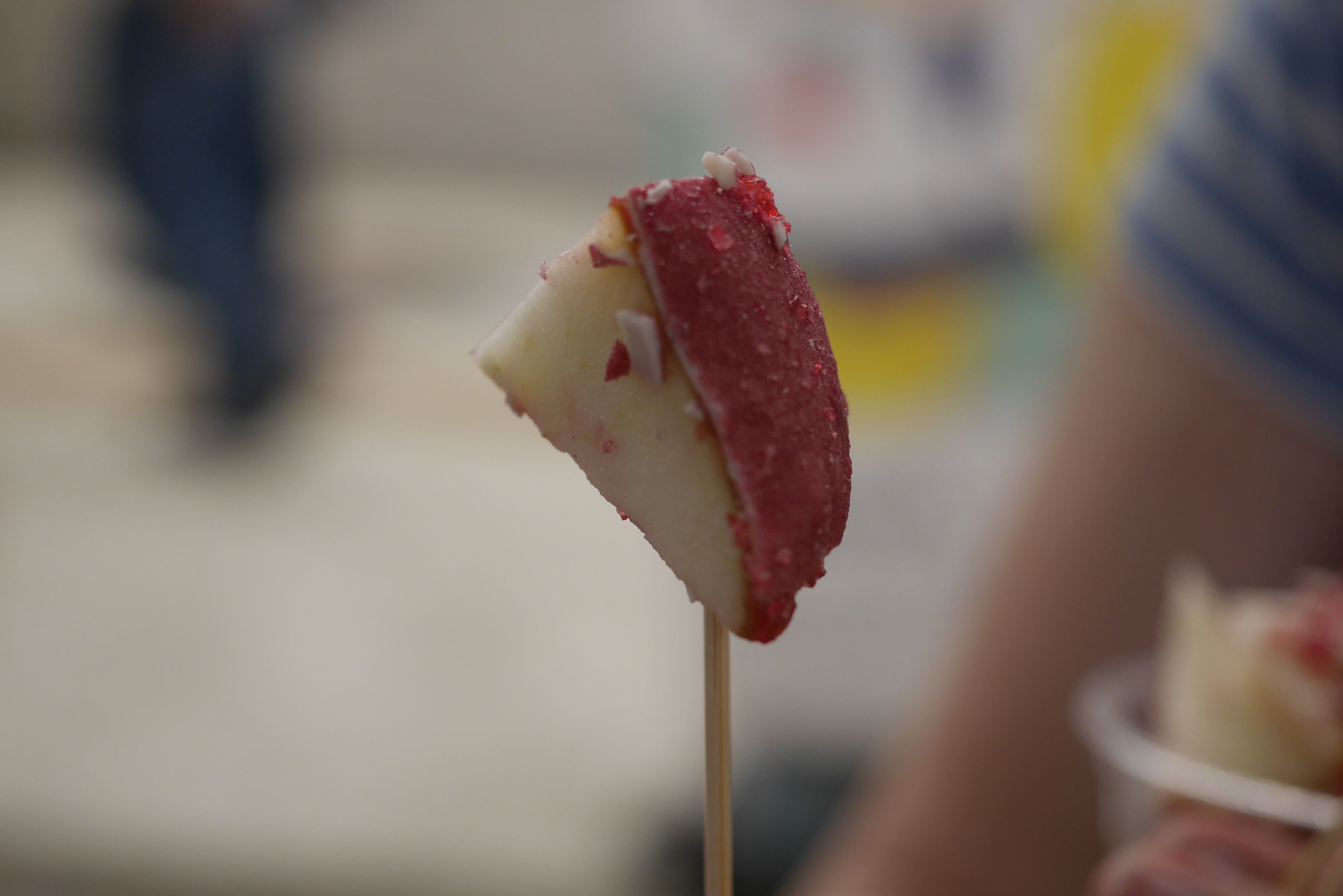

Around £3-4 would get you a jazzed up toffee apple, in our case coated with some white chocolate as well. It was pretty good as far as toffee apples are concerned, and having it cored and sliced was a nice touch that allowed for easy sharing. (that way the tooth disease is shared out evenly, too)
Pub Grub
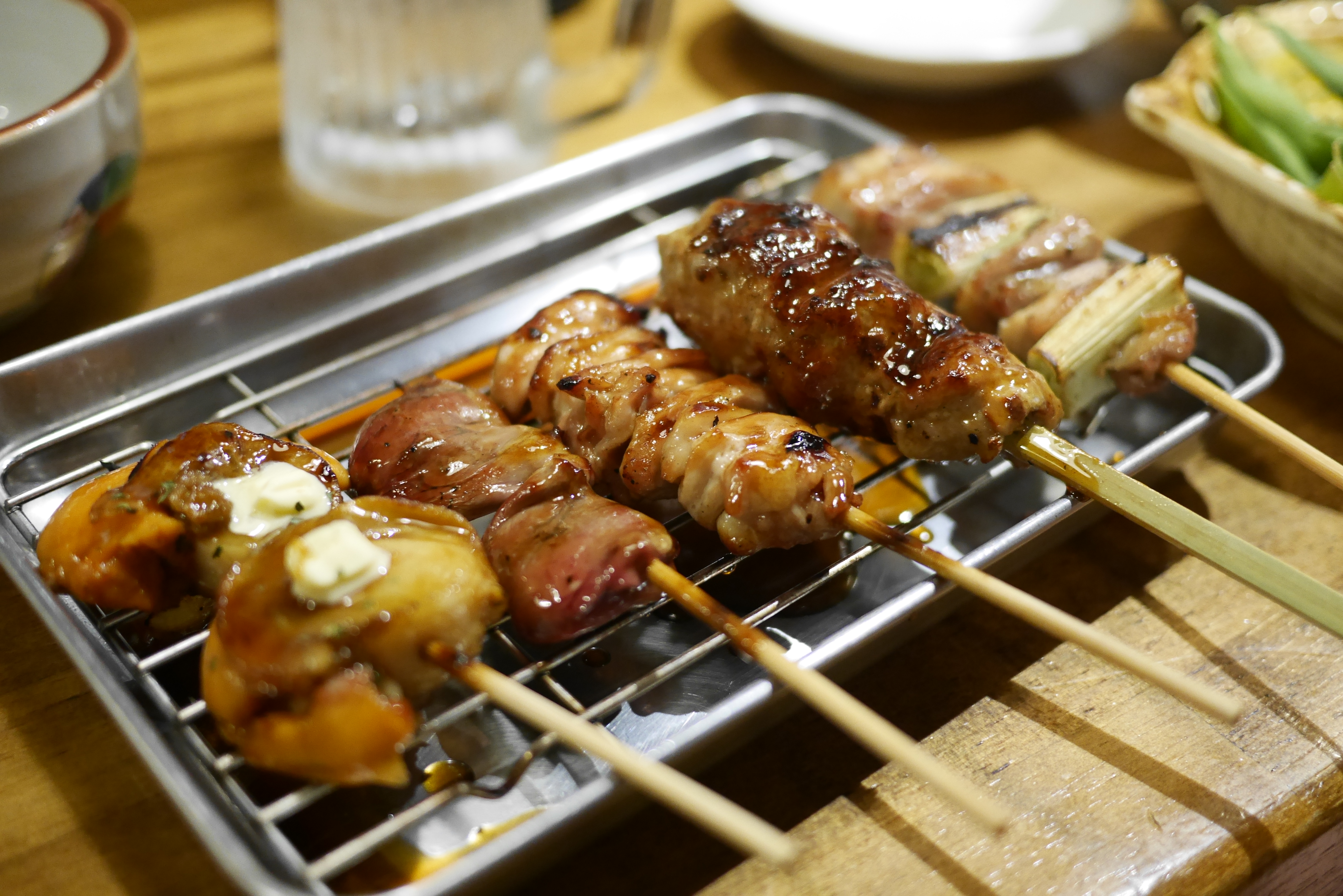
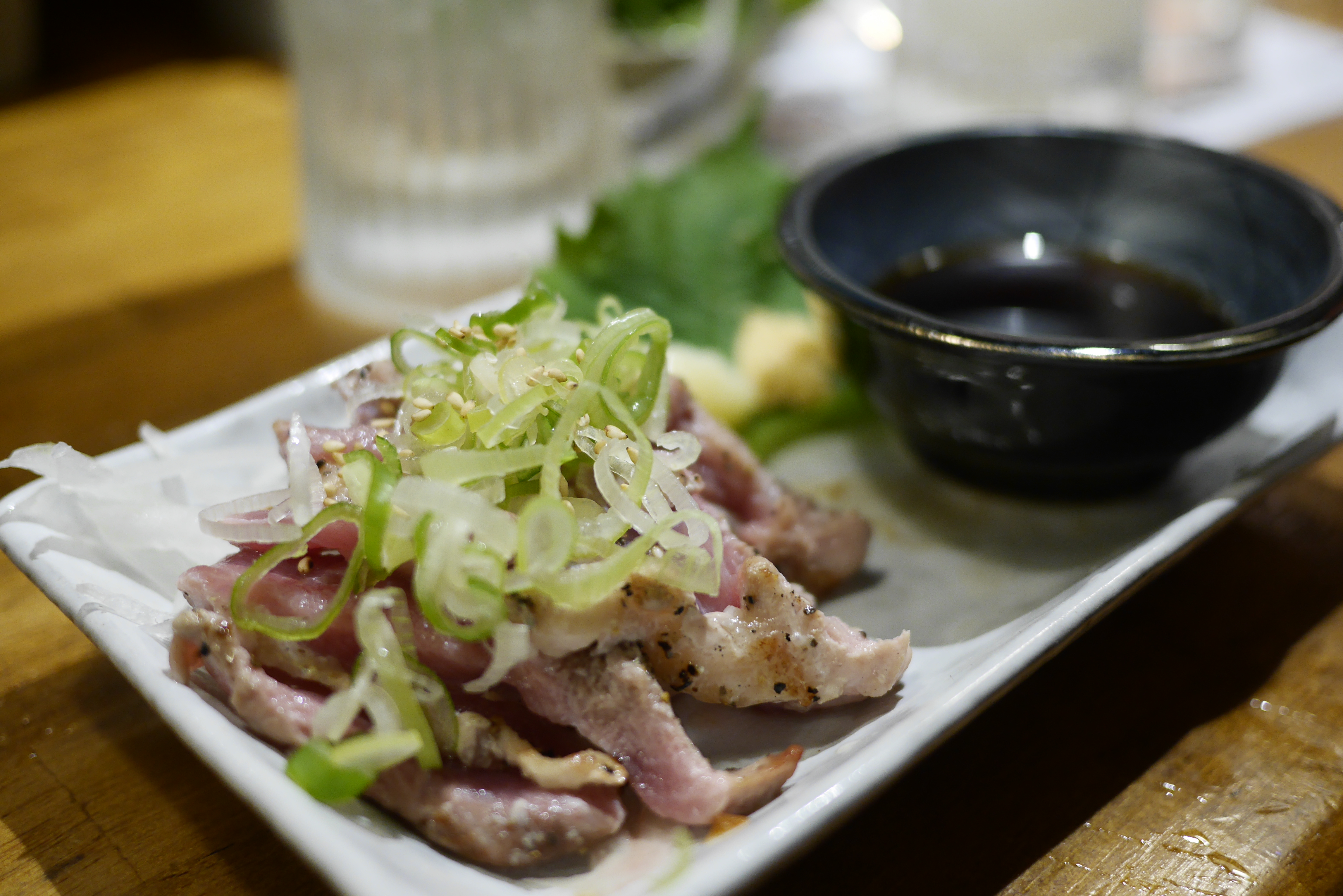
Pub grub has very different connotations when it comes to Japan. Japanese pubs, or izakayas, tend to be small establishments where you can enjoy some grilled meat skewers with a beer or highball and your friends. We spent an evening in Pollo in Naha sampling some yakitori and a few drinks. One of the more interesting offerings was chicken heart which was fine, but not my favourite. I remember trying chicken cartilage on a previous trip which was also a little challenging, if tasteless.


Steak-cation
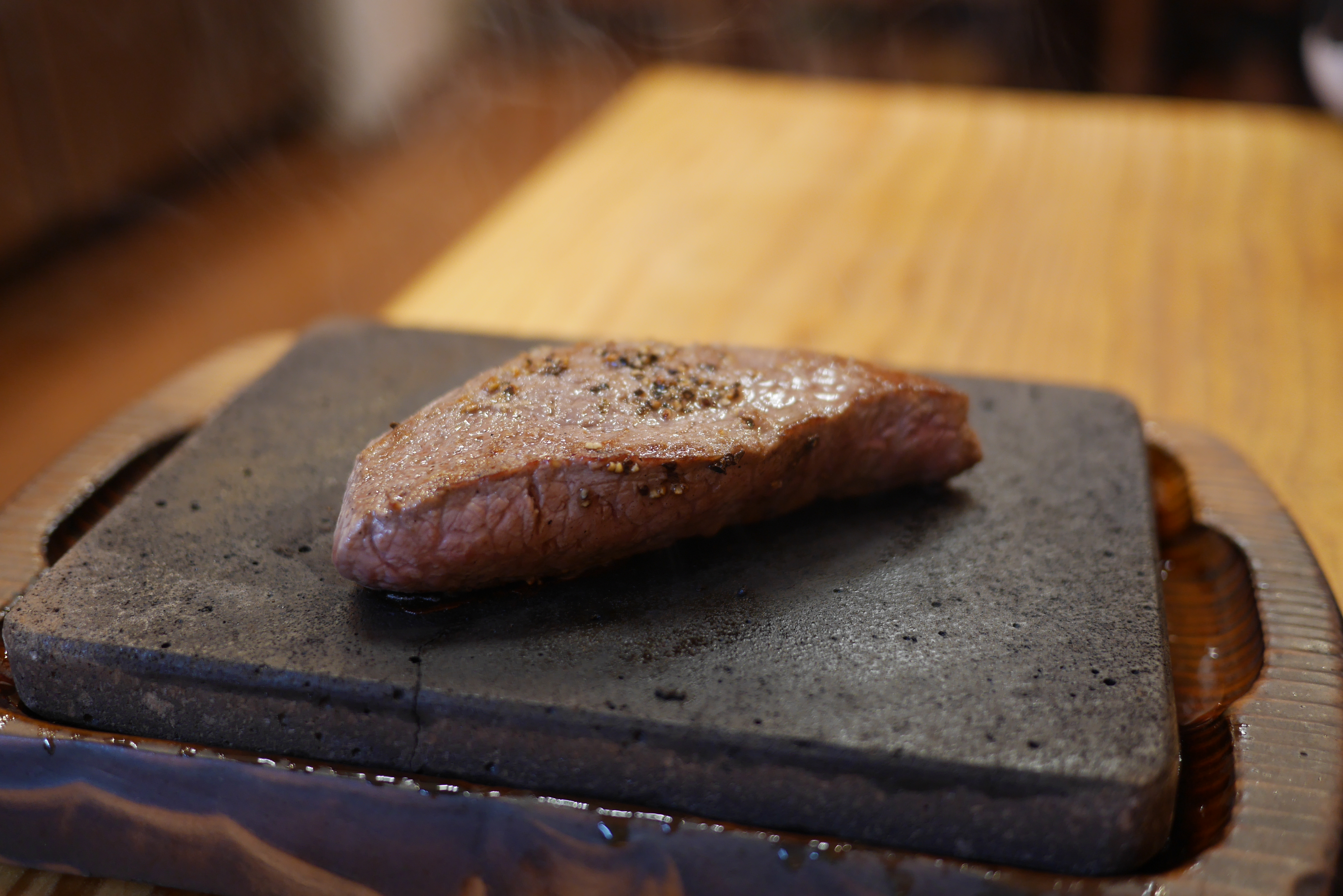
Beef isn’t just confined to burgers here. There are plenty of steakhouses that deal in excellent meat. That’s not what I come to Okinawa for though. What I come for, is dirt cheap vending machine restaurant steak. Yappari steak is exactly what I come for, serving 200g of steak for around £5, with unlimited pasta salad, cabbage, rice, and soup. The meat quality is excellent for the price, and the staff are really friendly and helpful too. This was our second outing, although to a different branch this time, but it was still great. The steaks are served on a hot stone so you can cook them to your liking. One of ours was delayed due to a communication breakdown, and as an apology they gave us even more steak for free. Top notch service for an unbeatable price.

Hopefully that has given you a taste of what was on offer in Okinawa. Every kind of food you could desire, really. How about we finish with a cup of green tea and some traditional Japanese sweets at Shuri castle, Naha.

 Ordinary Decent Gamer
Leave a comment