
This one is a little delayed, but it hasn’t exactly been a normal week. What possessed me to try and do a long journey in an electric car, you might ask? Perhaps I just needed a distraction.
You can’t ask a gadget fan if they’d rather have a Polestar 2 or a Vauxhall Astra. It’s not really a fair question. Luxury electric sedan against a run of the mill petrol affair. So that’s the route I took when presented with the same decision at Hertz in Plymouth. I was assured it would be really straightforward. I mean, it would have been if it worked.

Polestar 2
Born of Volvo and Geely, Polestar brings a Swedish twist to the Tesla-saturated electric vehicle (EV) market. If I’m being perfectly honest, it embraces a cyberpunk aesthetic more than anything else. It wouldn’t be out of place in Night City or a future Los Angeles in pursuit of a replicant. More square than round, with sleek lines and striking headlights. The interior is no different, hugging you like a cockpit, with comfy seats and a fairly low driving position.
Getting used to an automatic and electric in one go was a bit of a challenge. Every time I approached a junction or roundabout, my left hand crept out only to fail to find a gear stick. The shifter on the Polestar is pretty inconspicuous so at least I wasn’t shifting it into reverse unwittingly. The accelerator is also very sensitive, which is a challenge when you come from driving a small engine petrol hatchback. It didn’t take long to get used to the new way of operating as soon as I hit the A38 and motorway.

This is where the car really started to shine. I settled in to the seat (which has a ridiculous amount of options for adjustment) and enjoyed being able to overtake without a week’s notice and an application stapled to a lamp post. This particular model comes with adaptive cruise control which was really nice on quieter sections of the motorway. I could just set the speed and take my foot off the accelerator, knowing that the car would automatically slow down if the person in front braked significantly. It’s not autonomous driving, but it does help some of the monotony of long distance.
If you’re a child from the 90s, you’ll recognise the Grand Theft Auto-eye view from the parking cameras. They create a composite image of the surrounding environment which is really handy for getting into awkward spots. Add to this the standard parking sensors then it’s hard to inadvertently bump anything. The Google Maps integration worked really well, showing you how much battery would be consumed during the journey, and highlighting suitable charging stops along the way.

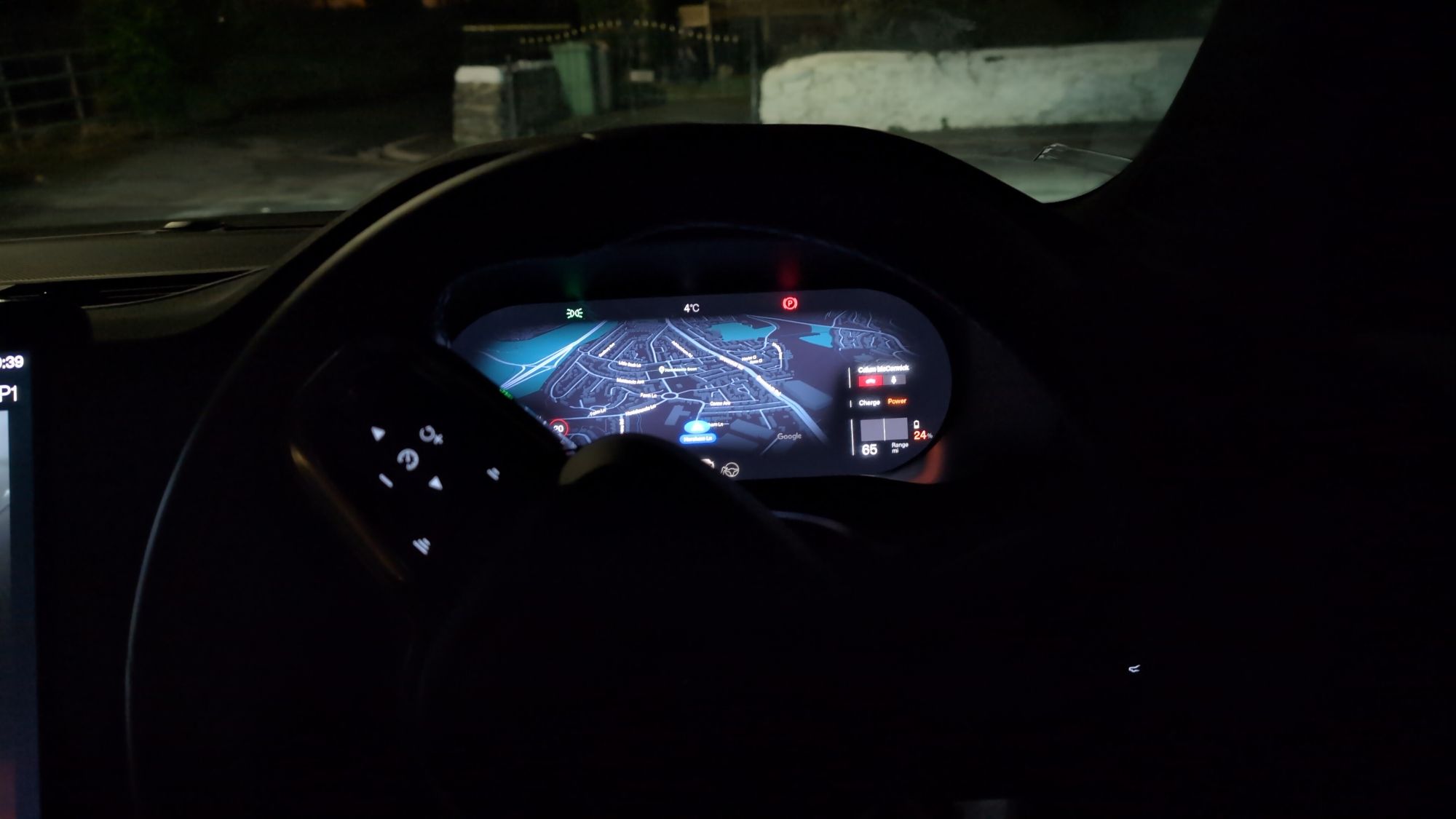

The view through the rear window is fairly restricted, a problem the Polestar 2 shares with the Tesla Model 3, but the almost frameless wing mirrors have great coverage and warning lights to show you when someone is creeping into your blind spot. The restricted view does make you somewhat reliant on the parking systems which take a little getting used to. The amount of safety technology crammed into this shell is amazing.
From my brief reading the Tesla Model 3 is significantly faster, although if that’s the case I’m not sure I could handle that. The acceleration on the Polestar is incredible. It’s the difference in being able to overtake safely without having to drop into second gear and pray. The Tesla is also more efficient due in part to the aerodynamic styling and lightweight construction. The Polestar is based on the Volvo XC40 so not entirely optimised for an all electric model, but still the range and efficiency is still decent. The long range model gets anywhere from 185 to 380 miles on a full charge, dependent on the calibre of road and temperature. Cold weather motorway driving will significantly impair the range, but that’s a challenge shared with other EVs. That brings me onto a crucial part of the EV experience. Charging.

Not all chargers are equal. It’s something you learn very quickly, and suddenly you start to drill down for details of kW rating, plug type (CCS, Type 2, or CHAdeMo), number of charging points etc. There’s a big difference between a 7kW supermarket car park charger and a 250kW fast charger. The difference could be 12 hours charging vs 20 minutes. Tesla has the advantage over other brands with their network of Superchargers and optimised integration with their cars. The network isn’t particularly well developed in the Southwest, however. Some Tesla Superchargers are also available for use for other car brands but that’s not a guarantee.
Over the space of two days I ended up with four different apps for different charging networks. Many did have contactless payment options but some required an app to initiate, and others offered preferential rates through the apps. The availability of chargers wasn’t an issue in itself. Along my route there were fast chargers from BP Pulse, GeniePoint, and InstaVolt. But could I use them? Toss a coin.

I managed to get from Plymouth to Hereford with a plan to stop for some supplies at Nailsea and figure out how charging worked, then a safety stop after another bit to make sure I wasn’t dropping the charge too low. This was more of my own range anxiety than a problem with the car. Could I trust the estimated battery consumption? (yes, it was surprisingly accurate) How low could I safely go? (much lower than I ever let it)
I had always ended to make at least one stop because driving over three hours solid isn’t particularly fun. I’ve done it a few times but slightly regretted it. In the Polestar however, it was completely different to my normal long distance experiences. I was comfortable for once! I haven’t been as comfortable sitting in a car as this ever. It was the ideal way to travel, and I was enjoying the sheer power of the motor, easily overtaking any car I needed to.
First stop at Tesco Superstore in Nailsea was a 7kW charger, which is not great. It’s better than using a 3 pin plug (2.4kW, 13A) but much slower than fast chargers. What I didn’t realise is that the amperage could be changed manually on the Polestar, and was set too low at first. I’m not sure if this is a genuine feature or a fault in this car, but it meant I was charging extremely slowly at the outset. The 7kW point was never going to be fast though, but it was more an exercise of figuring out how to work the cables. Hertz included a Type 2 cable and a cable terminated in a 3-pin plug for home charging.
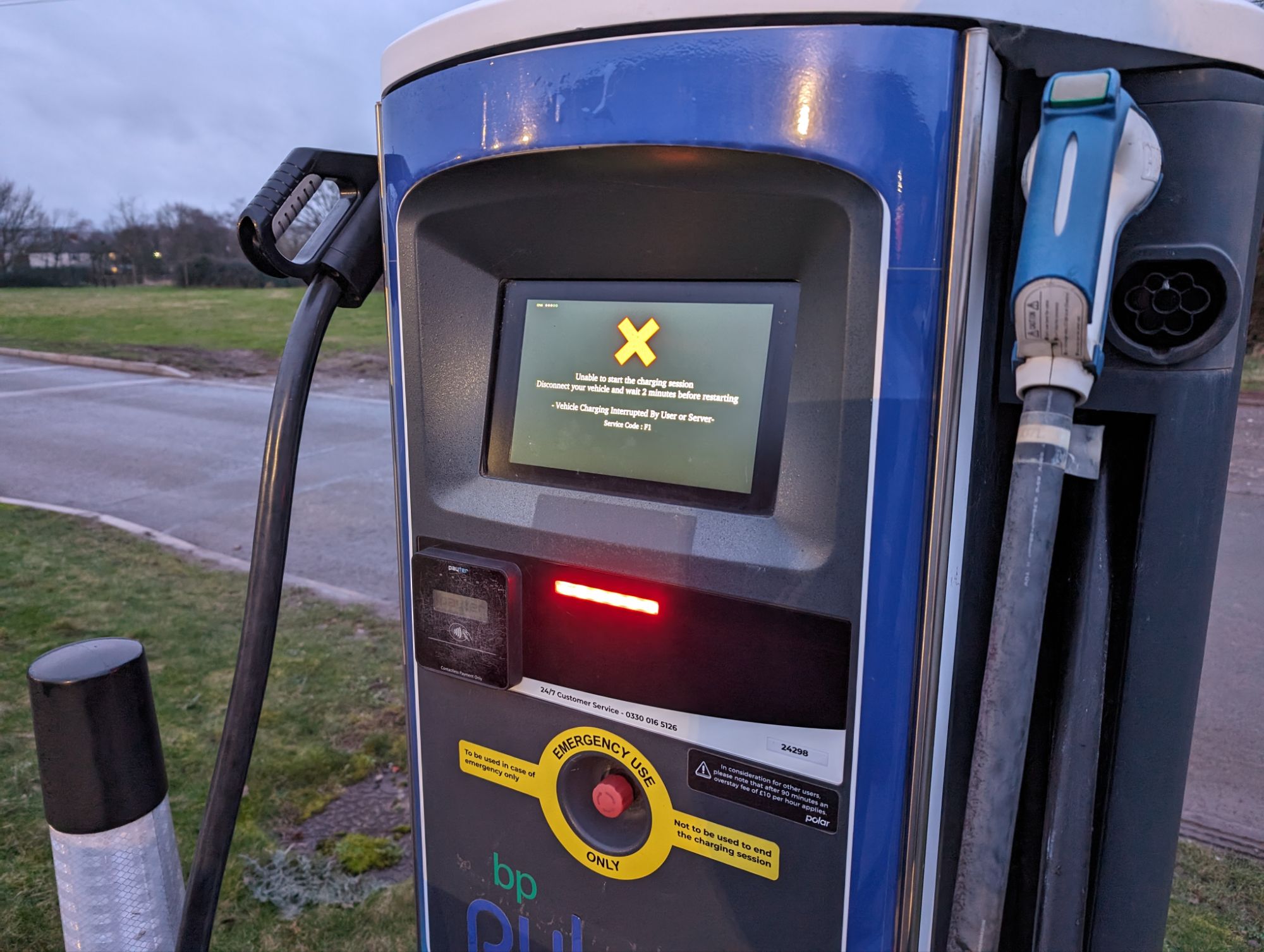
The problems started to arise when I tried to charge at a BP Pulse charger at the HQ in Hereford. It passed most of the initiation checks, then came up with an F1 service error. I tried several other charging points on the site, but it continued to show that error. The error persisted even after I called customer service who picked up immediately and reset the charging point, but to no avail. At that stage I was using the Type 2 AC connector because the Hertz representative had failed to explain that CCS was basically an extended Type 2 connector with a bit on the bottom, and that bit would fit if you pulled out the rubber bung underneath the charging port. It sounds like common sense, but when it’s completely new to you it’s a lot to figure out.
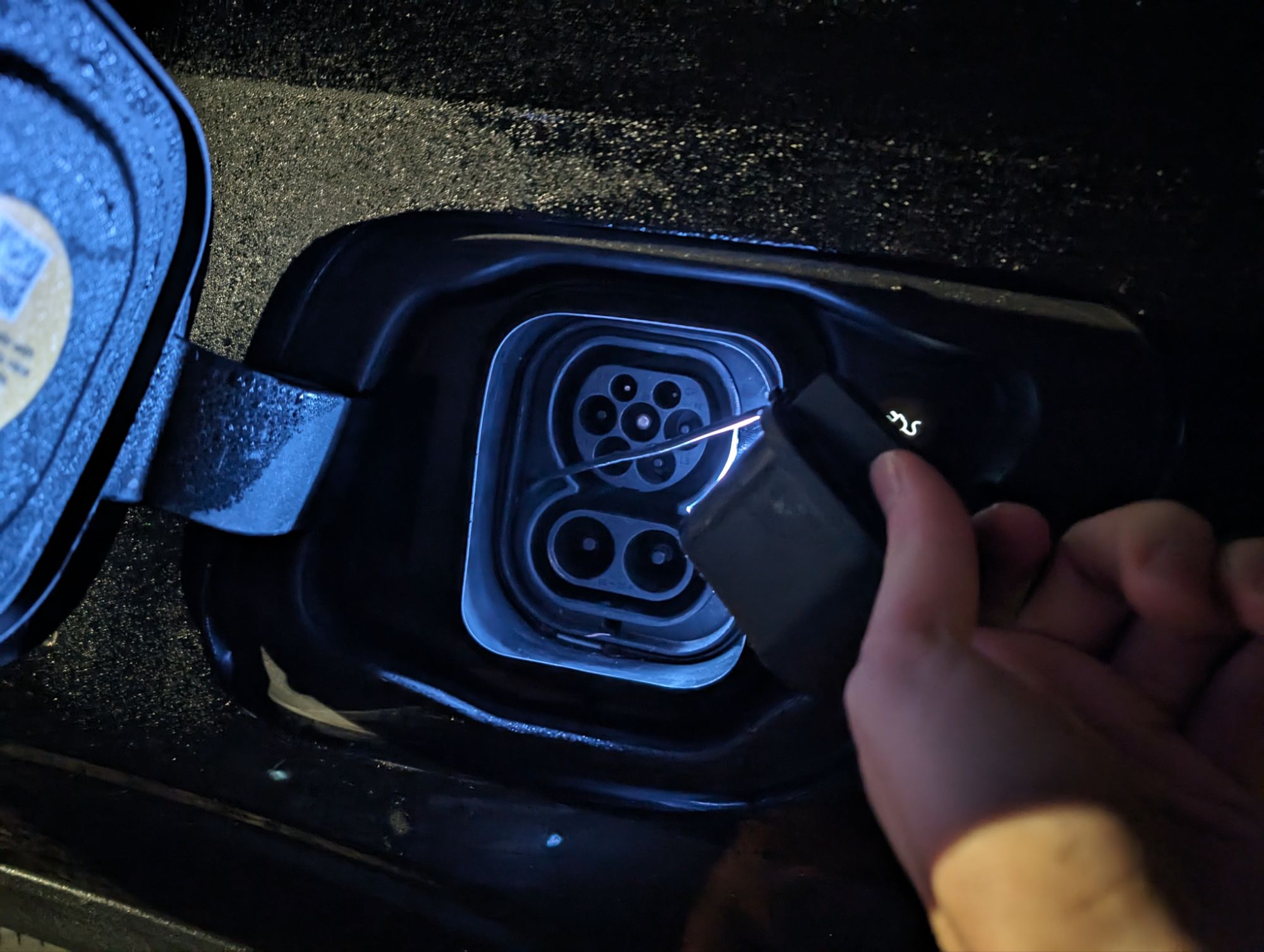
I managed to find a medium speed charger in Hereford which gave me enough juice to get to my final destination where I charged from a regular plug socket overnight. It did make me slightly concerned that I would be able to get enough charge to get back to Plymouth but that was a problem for the following day. A trip out to Birmingham airport and back to Hereford racked up another 112-ish miles. We stopped to use an InstaVolt charger by the airport, but again encountered an error initiating charging. Moving to another charger yielded the same error. After multiple chargers from different networks were causing problems, the fault had to lie with the car rather than the chargers.
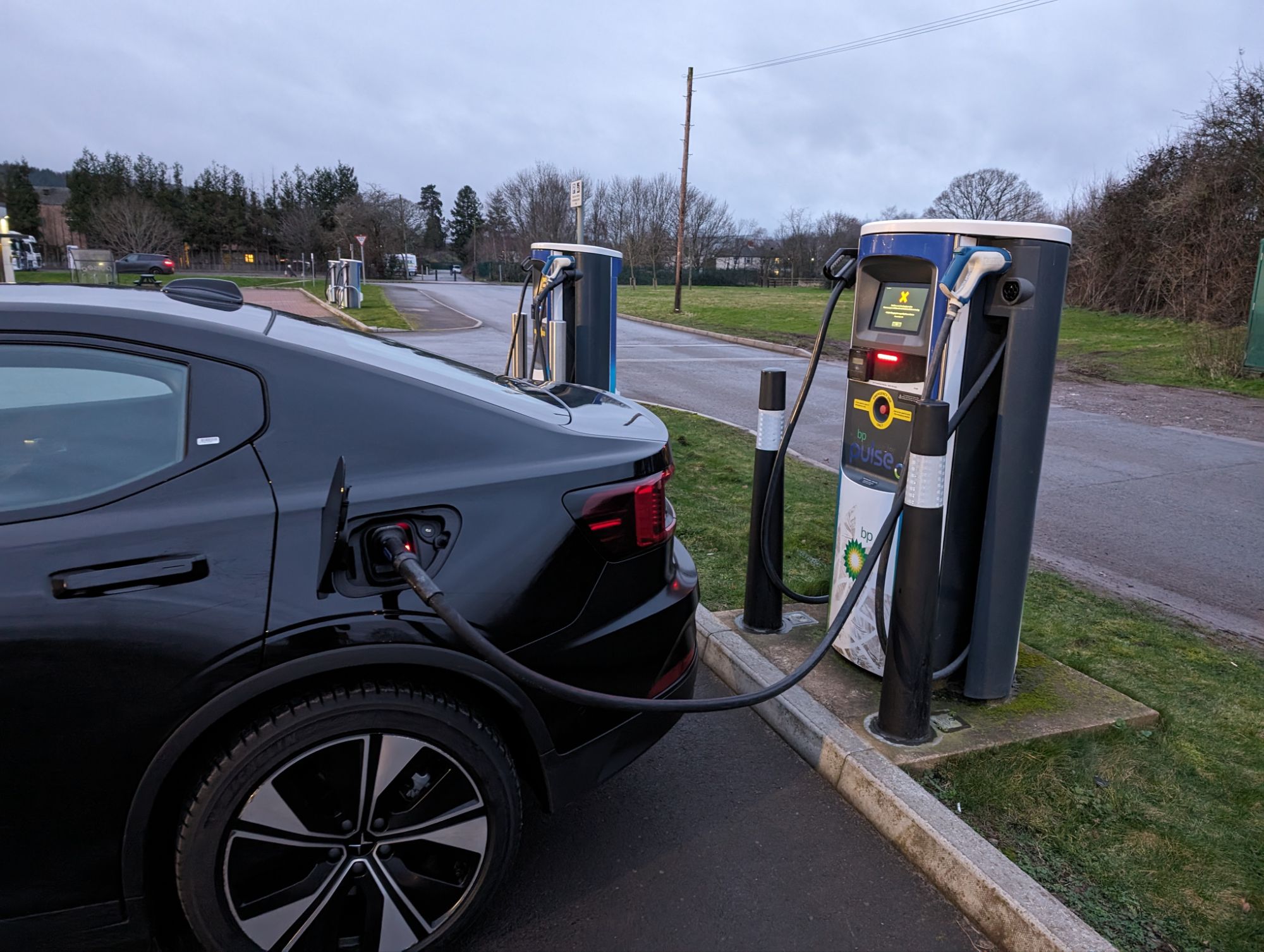


Thankfully I found a decently fast charger (50kW) which worked in Monmouth at a Premier Inn where I called in for some coffee and dessert. The Google Maps integration in the Polestar suggested charging to 83% would get me to Plymouth with around 10% to spare. The staff were really friendly and opened the restaurant specially for me. If I knew this was here on the way up it would have saved a lot of angst and hassle. A much more relaxing way to spend the time than standing out being buffeted by the wind while presented with an indecipherable error screen.

So are we ready to switch to electric completely? Not quite yet. Although there were more chargers than I had expected, there still need to be improvements to the infrastructure including the rollout of more 200kW+ chargers to make charging more akin to filling with petrol rather than an arduous ordeal. If my car wasn’t faulty, there would have been very little stress in the whole process.
In some ways the challenges added to the journey have been positive. It has forced me to take time to take breaks and decompress. There’s no doubt that electric is the future. The driving experience was incredibly refined and generally quite fun, but serious improvements to charger availability and grid capacity are required before any widespread adoption can happen.
 Ordinary Decent Gamer
Leave a comment