
The dramatic conclusion to our sewing machine epic is finally here. Will it work? Read on and find out for yourself.
I like to fix things. We’ve covered this multiple times before. If I can stop something going to landfill unnecessarily, I’m always up for taking something apart and tinkering. Sometimes it’s an easy fix like a thermal fuse in a basic rice cooker. Other times it can be more complex, like a melted relay in a washing machine that is symptomatic of a deeper problem. In an ideal world we would produce appliances that were modular and easily repaired, but that would be antithetical to our high consumption-low cost society.
Along that theme, last week I cracked open my wife’s 1990s Elna Club Computer sewing machine after an unexpected breakdown. Inside was a fried 0.047 uF safety capacitor. The difference between a working machine and the bin was £3.67. It was always going to be worth a punt for under £4. I dusted off my soldering iron and got stuck into it.

Cracking open the case (quite literally) did result in a few broken plastic tabs. I find if you’re not used to working with a specific machine you’ll almost always encounter a snagging point that’s easy if you know where it is, but a casuality of war otherwise. Some of the plastic in the case was exceedingly brittle and falling apart, but for the most part it was impressively put together.
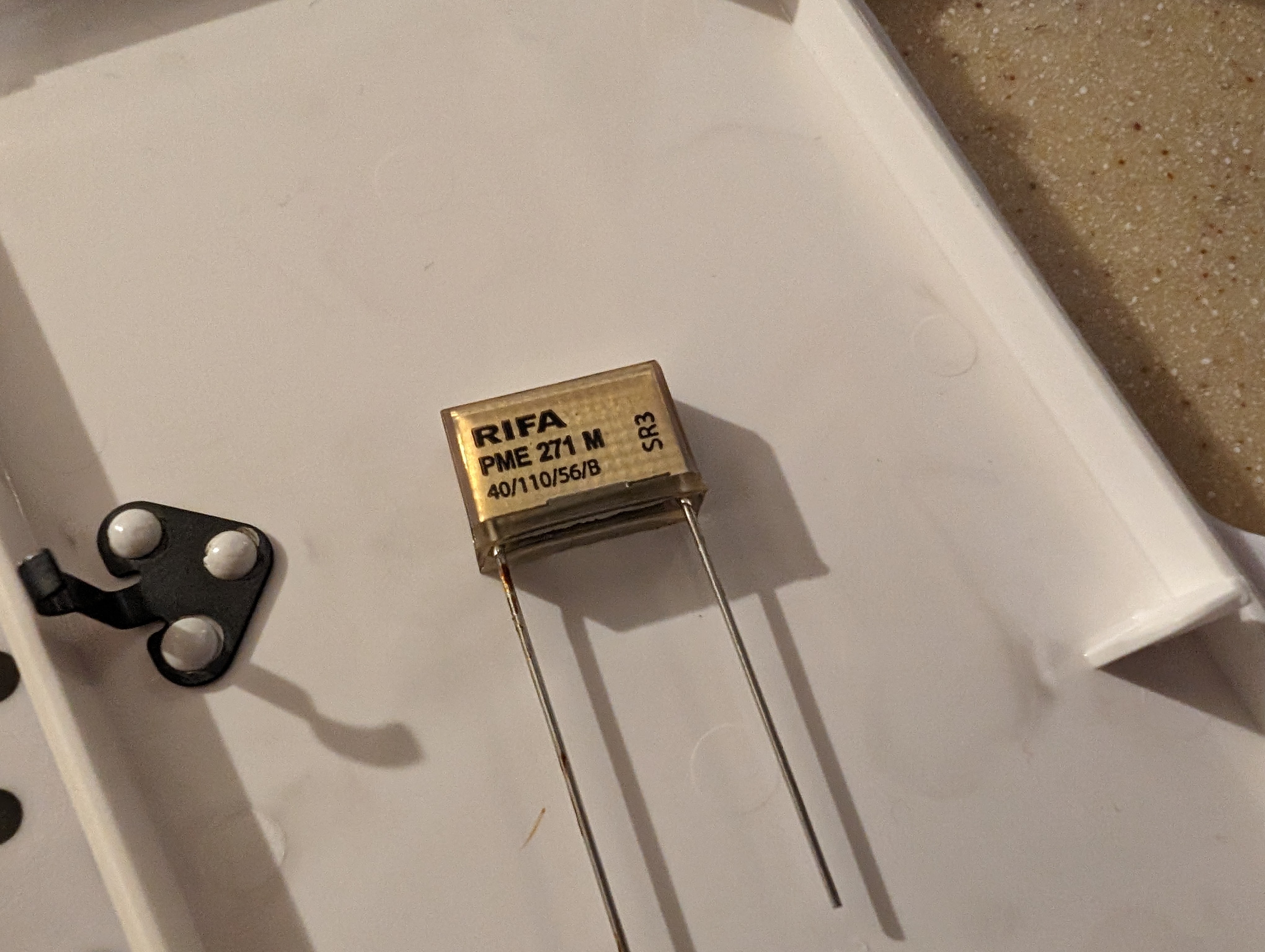
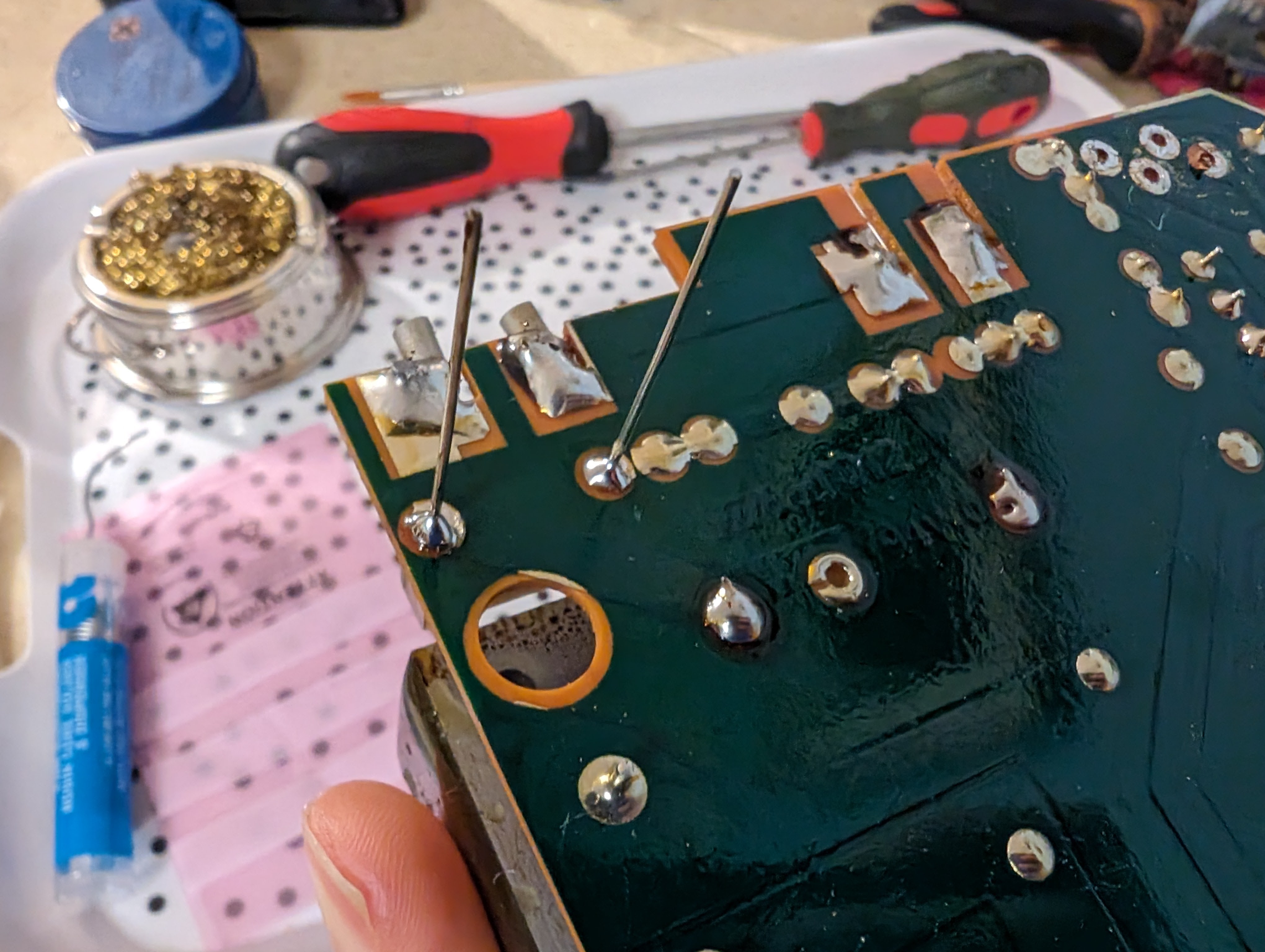
The new capacitor after soldering, then I clipped the excess length off the leads
Soldering the new capacitor leads was the easy part. The awkward bit was soldering the four leads connecting the power board which had to be removed to get to the capacitor in the first place. You need three hands. One to hold the piece of work, one for the soldering iron, and one to introduce the solder. It’s unwieldy but I managed to get everything put back together. The spade connectors that attach the switch and power lead were super flimsy and tended to bend as soon as they were connected.

That did it! The machine is alive and kicking once again. I’ve run it through a bunch of different stitch settings and it continues to work. Hopefully we’ll get another thirty years out of this one. The only issue is the bobbin winder on top of the machine doesn’t work, but it hasn’t worked since we’ve had it. The secondary motor spins but there is a gear that isn’t engaging and hence it doesn’t rotate. I would be tempted to buy a replacement but I cannot locate this model. The mechanism is complicated and despite some tinkering, I couldn’t get it working. That’s a problem for another day.

Time for a Break
I have been trying to do more cooking and baking recently, and part of that was making tomato soup and cheese and pesto pinwheels. They’re both BBC recipes, although the pinwheels started life as spinach, marmite, and cheese. The tomato soup sneaks in a lot of vegetables including tomatoes (surprisingly), carrots, sweet potato, onion, and red peppers. The pesto and cheese in the pinwheels nicely complimented the soup.


Tangentially related in that it has a tenuous link to food, it’s worth checking out the “Willy’s Chocolate Experience” website while it’s still on. The shambolic event held in Glasgow seemed to be the closest thing to a mass con there can be. The website itself smacks of scam with some bizarre AI generated art and no actual pictures of the proposed wonderland. Just one example can be seen below.

Catgacating aside, I really need to stop looking at this because it’s too damn funny and I’m not getting anything else done.
Camera Update
After a year of using my Canon 5D Mk3 for post mortem photography I’ve decided to try a different approach. Whilst it is capable of fantastic quality photos, the DSLR isn’t practical for other non-photographers to use and get decent results. Professor Kim Suvarna always said you need a camera that a child can operate and get a decent picture on, and I’m starting to see the wisdom in that. Photographs that are decent enough quality that can make it into a textbook, but don’t need to be perfect and can be rapidly and reproducibly acquired. To that end I’ve bought a Panasonic LX15, a compact camera (not my usual style at all) with a large-ish sensor and a fast built in lens (up to f1.4). I’ll have another update once it arrives. Hopefully this one will be a little more user friendly.


 Ordinary Decent Gamer
Leave a comment