
In response to the title, probably not…
A slight aside before getting into the meat of this post. We ran into the first battle for chargers over the weekend. At Gloucester services most of the chargers were occupied which led to a queue forming. There were some spaces on Tesla Superchargers, but not everyone has realised that the Superchargers at Gloucester are open to everyone, not just Tesla drivers. The charger I ended up using was showing as out of order but the emergency stop was depressed (something to be aware of when a charger is acting up, as I discovered in Liverpool). Once that was sorted, it was fine. It does highlight the infrastructural challenges we’re facing, even in a service station with a generous number of spots to charge. And that’s why we got another electric car…
A Cupra is Born
Or rather, Born is a Cupra, a model from the offshoot which started life as SEAT’s motorsports division. The Born shares the same bones as the VW ID.3 but with a somewhat more aggressive, sportier twist. There are definite hot hatch vibes with this one.
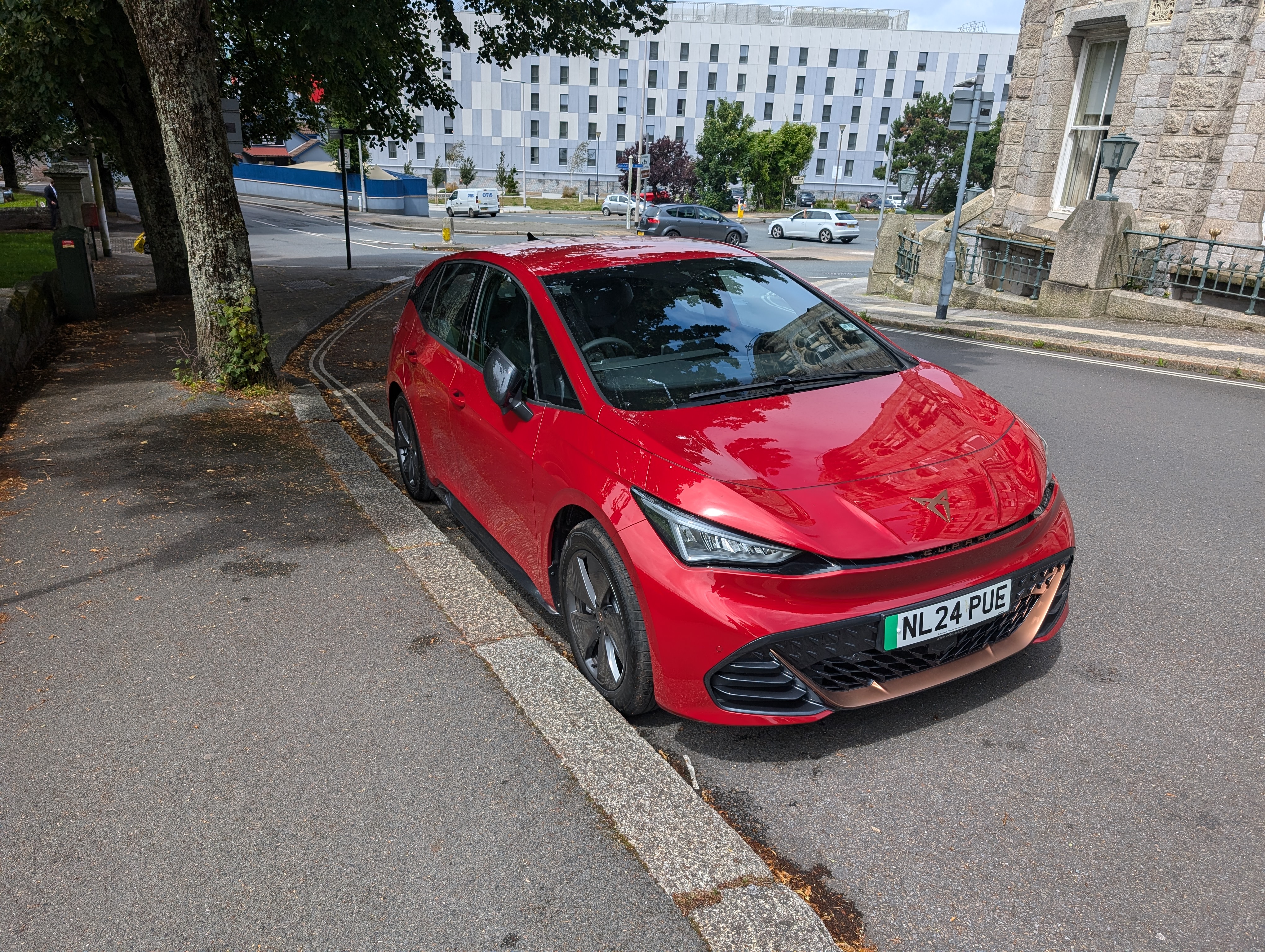
It feels quick. Not Polestar 2 quick, but still faster off the line than most petrol cars. I had a proper road test on Monday taking it up the A38 and M5 to Exeter airport, then back via the A30 down through Tavistock and into Plymouth city centre. There are two main driving modes “D” and “B”. “D” requires the brake to be depressed to activate regenerative braking, whereas with “B” the regen kicks in when you lift off the accelerator. The strength of regenerative braking is much less than the Polestar 2, although it does mean you can get away with using the brakes less than you would have to driving the equivalent petrol car.
There are different driving style options too, although some quick reading on relevant forums seems to suggest they do little to change the actual driving experience. Most of the controls and options are accessed through the central touchscreen although there are a few touch sensitive buttons below this, a traditional hazard light button, and steering wheel controls. There’s a smaller screen behind the wheel which provides the standard dash instrument views plus a simplified navigation view.
The infotainment system works well and the navigation is straightforward to use. At times the maps are a little cluttered but I haven’t explored the settings in relation to this. The system isn’t quite as simple to use as Google Maps in the Polestar 2, but it does work in conjunction with your Android smartphone and Android Auto to provide much the same functionality.
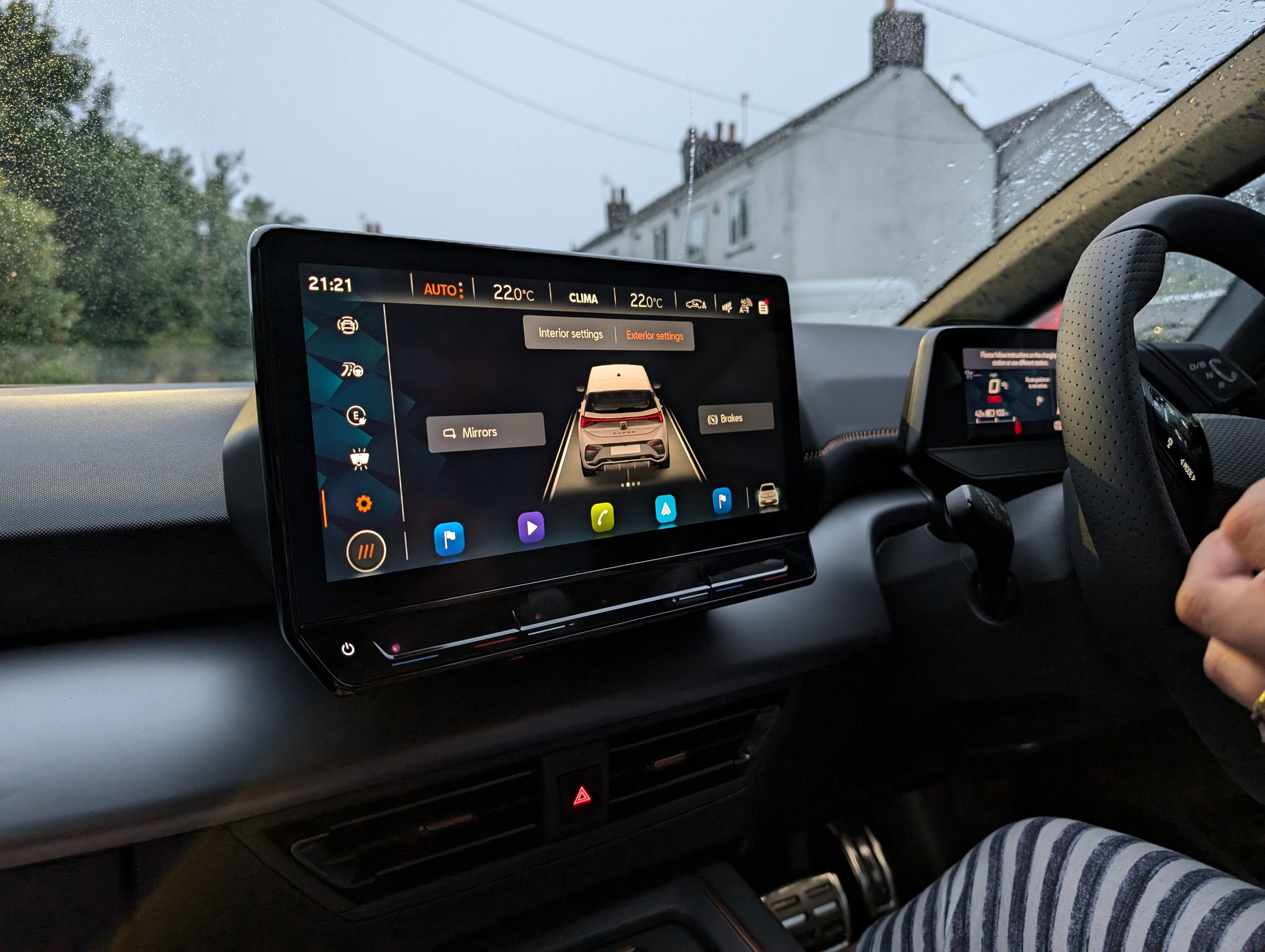
The car animations are quite impressive as well as you click through the settings and are treated to a 3D render to the relevant parts of the car. It’s fairly intuitive, although slightly more cluttered than on the Polestar overall.
This is really a first impressions write up as I’ve only driven slightly over a hundred miles, but it has been fun and reasonably comfortable. The cabin feels spacious and the visibility is great and relatively unhindered by pillars. The driving position feels higher than the Polestar 2 as well. Let’s see what the next thousand miles are like.
Even though there are challenges to electric vehicles with limited range compared to petrol counterparts, the driving experience in my view is much more pleasant, and you can rack up the miles without the accompanying exhaust fumes. Yes there may be an initial offsetting period due to the manufacturing of car and battery, but even if the electricity used to power cars is derived from fossil fuels, they’ll still be more efficient than an internal combustion engine. Electric is the future, and as renewable electricity generation becomes more and more efficient the gains will be even greater. And they make for really fast and fun cars. Win win.
The Best Resident Evil Movie (That isn’t Resident Evil)
RECsident Evil? [REC], the 2007 found footage Spanish low-budget horror film, might just be the greatest Resident Evil film out there. Or at least the closest thematically to what the games achieve. I was vaguely aware of the film but not being into horror, it didn’t really cross my mind to watch it. We rediscovered it whilst looking for a shorter film to watch, and it did not disappoint.
Probable spoilers ahead! Go and watch [REC] if you haven’t already.

[REC] follows a TV reporter and cameraman who accompany a fire crew who are called out to a disturbance at an apartment building in the middle of the night. Things start to deteriorate as they discover one of the elderly residents has gone feral and started attacking folks. That’s only the beginning, and it rapidly transpires that something is very wrong. The building is sealed off and put on a BNC (biological, nuclear, chemical) protocol for a potential biological threat. Despite having several injured party members, nobody can get out of the building.
The architectural setting of an old apartment building feels very Resident Evil, and the inability to leave the front door harkens back to the zombie dogs outside the front of the mansion in the first game. There are shutters. There’s talk of a sewer. I was joking that there would be a secret lab involved, and hey presto there it was hidden in plain sight.
The lab comes late in the film and is chocked full of Resident Evil favourites. A reel to reel tape recorder with creepy descriptions of scientific observations – “Finally isolated the enzyme”. There’s no power (of course). There are religious symbols and art all over the walls alongside newspaper clippings and anatomic drawings. Even pictures of brain scans. I can imagine a situation where the creators of [REC] took inspiration from Resident Evil, and elements from [REC] ended up influencing choices in later game installments.
It’s not a perfect film and is showing its age, but if you’re a horror or Resident Evil fan, I’d definitely recommend giving [REC] a go. The sequel follows on from the immediate aftermath of the first film and is also pretty fun. These aren’t ultra serious films either so you’re unlikely to be emotionally scarred forever. Maybe just for a few hours.
 Ordinary Decent Gamer
Leave a comment