
Let me whisk you away from this wintry British weather to a pleasant Autumn day in Porto.
We left off moments away from crossing the bridge. What bridge, you ask? The Dom Luís I, of course. This is the bridge that pops up in a lot of the photos of Porto, and rightly so. It’s a rather iconic double-deck iron construction bridging the Douro, and offers stunning views of the city.
The Bridge, as it will hereafter be known, was built between 1881 and 1886, and if the ironwork looks a little reminiscent of the Eiffel Tower that’s no surprise. The Bridge was designed by one of Gustave Eiffel’s disciples, Théophile Seyrig. The two had previously worked together on another similar bridge in Porto, the Maria Pia bridge.

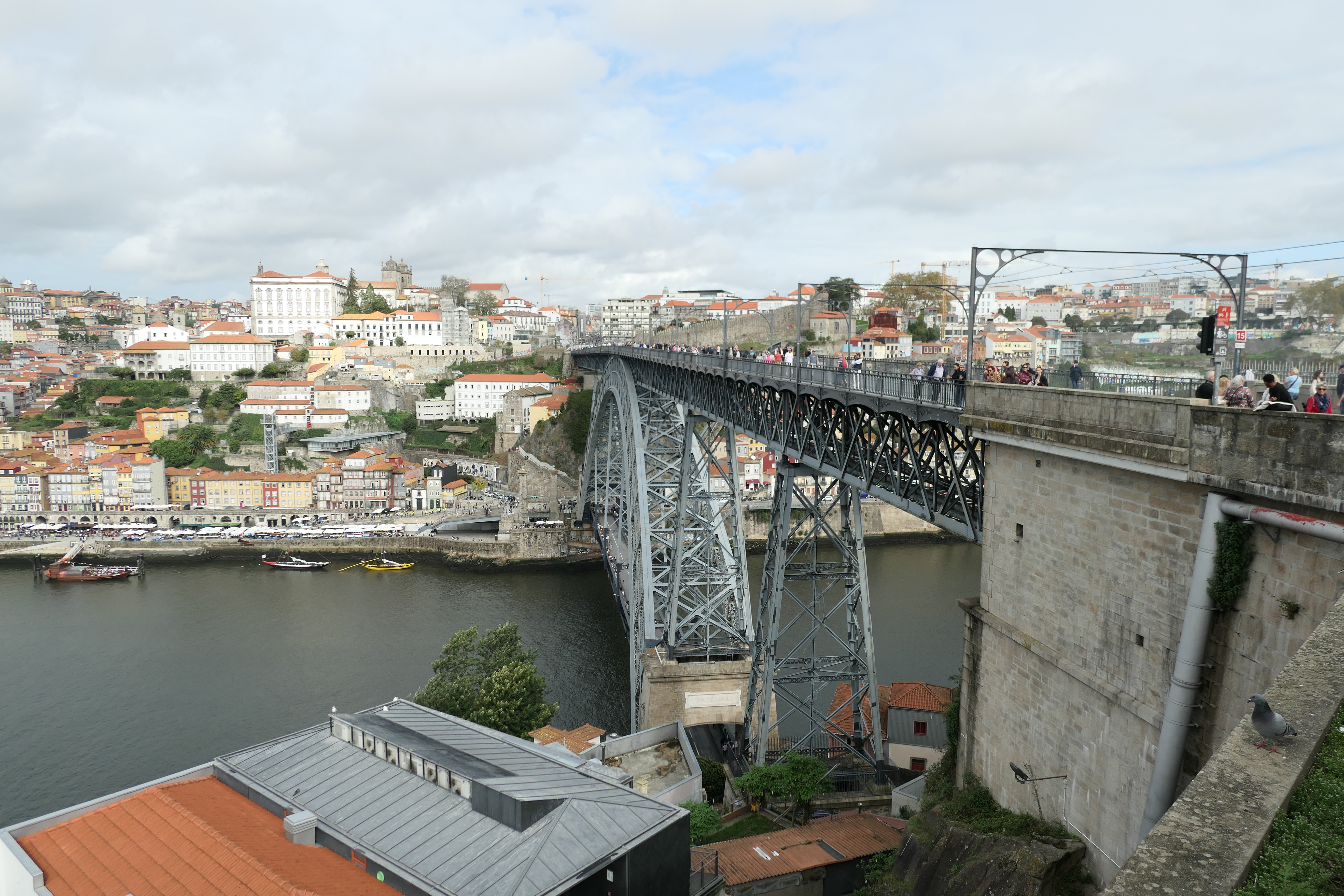

At this rate, the entire post is going to be me attempting to cross the Bridge. You’ll be pleased to hear, I’m sure, that I did in fact manage to eventually cross the Bridge. Not without learning the entire history of Bridge and similar lower case bridges, of course. For across the bridge, lying in wait, are endless casks of the eponymous spirit. Port.

I had a destination in mind. Augusto’s/Quinta dos Corvos, a small Port House tucked away down an alley between the waterfront and the WOW (World of Wine) museum complex. I am sure any Port house I picked would have been fine, but a dive into various websites lead me to a recommendation for this one. It wasn’t big, but it was well worth a visit with an interesting tour and delicious tasting at the end. I can’t remember the price (blame the Port) but it was quite reasonable. I can’t say the same for Taylor’s which was €20 for a “self-guided” tour. Or perhaps “tour” should also have quotations because wandering around a cellar aimlessly is not the same as having an experienced staff member explaining the process. How else would you learn about the difference between a Ruby and Tawny Port, and what makes Vintage superior to LBV?


For answers to those questions and more, visit Porto. I am almost certain that you probably know what Port wine is if you’re reading this, but if not, here’s a primer. Port is a fortified wine that is produced in the Douro valley in Portugal. The wine is produced in the normal way but neutral grape spirit is added to halt fermentation before the natural sugars are fermented out of the grape juice. This has the effect of also boosting the alcohol content to between 16% and 20%. The result is a sweeter, stronger “fortified” wine, and one that is an excellent accompaniment to cheese or as a dessert wine.
Given that the beginning of the process is the same as classic winemaking, the varieties mirror traditional wines. Red, white, and recently a few houses have started offering rosé Ports. Following the initial process, the Port may be stored in stainless steel vats un-aged and sold as Ruby, or it will spend a variable amount of time in oak barrels and be sold as a Tawny. A ten year old Port has a minimum age of 10 years, and may include blends of wines up to 19 years old. A 20 year port will be 20 to 29 years old and so on. After 70 years the quality is said to take a hit, so there’s not much advantage at this end. Once the Port is bottled, it no longer ages. There’s no benefit to holding off on drinking that special Tawny.
There are, of course, exceptions to this. A vintage year is one of exceptional quality and the Vintage wines produced are in casks for a couple of years, bottled with sediment, and continue to age in the bottle. They require proper cellar storage and rotation. Late-bottled vintage (LBV) wines are a cheaper alternative to Vintage, which spend 4-6 years in the cask and are ready to drink.
The long and short of it, there’s a lot to Port. And to Porto.
Now back to the most important part of the trip…
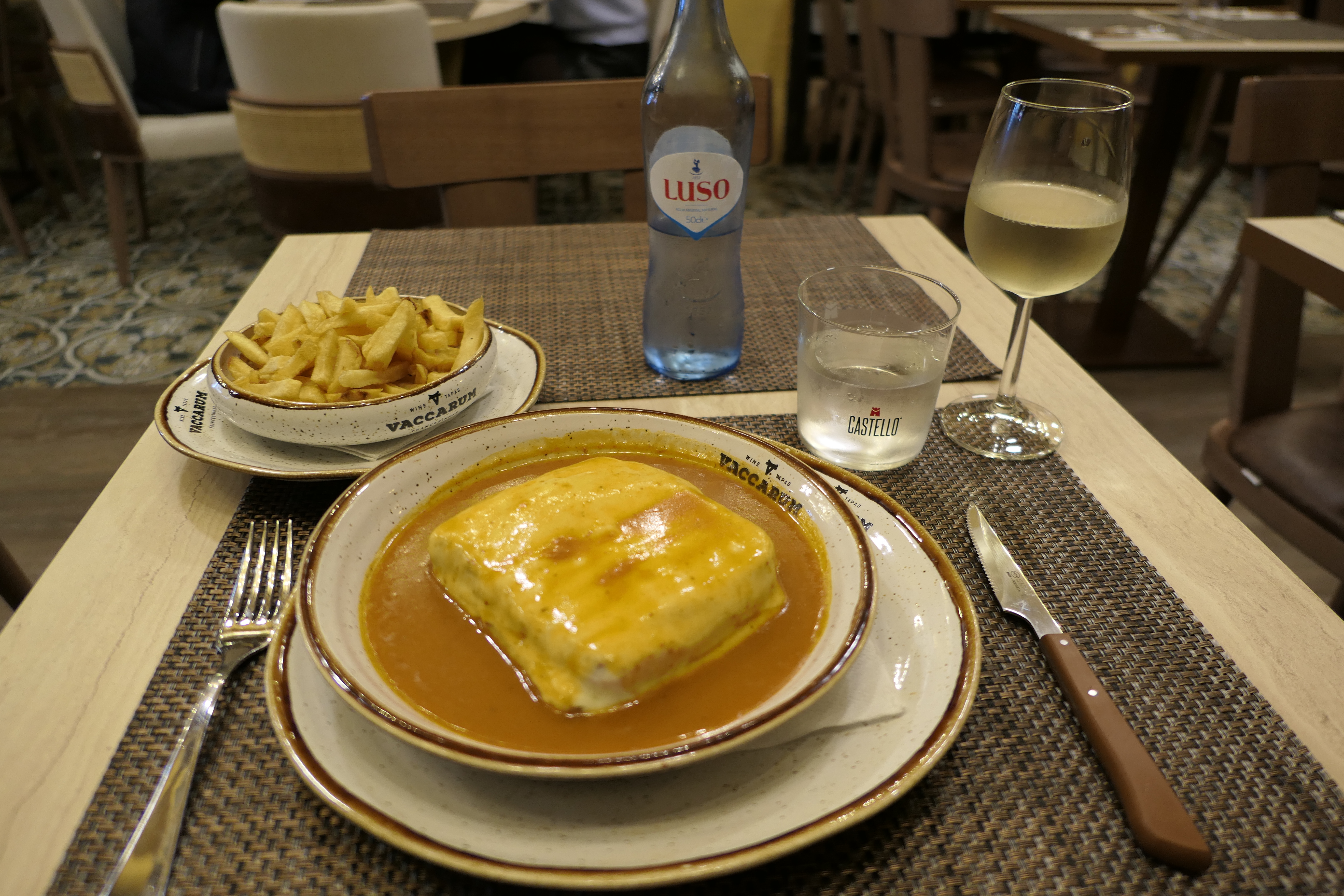
Ham. Linguica sausage. Steak. Melted cheese. Beer sauce. Yes my friends, we have made it to food heaven. It could indeed be the last sandwich you experience before a heart attack, and is as far from a “light lunch” as humanly possible, but the Francesinha is a must-try food when visiting Porto. This is coming from someone who has had it outside Portugal and wasn’t sold on it. Nothing compares to the real deal though, and it didn’t have the soporific effect I expected. I encountered this particular example in Vaccarum, close to my hotel. Time to take a walk by the Douro again to digest this hearty meal.

Rabelo boats are about as Porto as you get. Other than the Bridge. These flat-bottomed boats were used to navigate the river Douro and transported goods and people. The journey from vineyard to cellar used to be rather fraught before overland transportation, with the Rabelo boat crews navigating dangerous waters and rapids, making the final product even more precious.
Speaking of final products, this isn’t one. Stay tuned for another chapter of Porto. Probably one with a smidgen less Port. And a lot more -o.

 Ordinary Decent Gamer
Leave a comment