
I have a very particular set of skills…
Part of my job is to carry out post mortems on people who have died whilst diving. It is a fascinating area of medicine and requires knowledge of both traditional pathology and pathophysiology, and the physics and physiology of diving. It isn’t what I expected to develop a specialist interest in when I started this career, but the opportunity was extended to me by a colleague who was approaching retirement. He had been the sole expert for the region and was looking for someone to apprentice into the role.
I say “role” loosely. There is no official position. There is no job description, save that which I write myself. I do have a scope of practice: I only investigate non-suspicious recreational diving deaths, as commercial diving deaths fall under the remit of the Health and Safety Executive in the UK. And I only investigate deaths if the Coroner commits to equipment testing. This is an absolute condition.
My background is as a practicing histopathologist and autopsy pathologist, trained in the UK, and the vast majority of the work I undertake is on behalf of HM Coronial service. The system feels rather archaic and is de-coupled from the National Health Service (NHS), in contrast to my day to day work which is in a purely NHS capacity. My hope is that in the near future that may change, but for now my post mortem work is completely separate. That may be an overstatement, as I still train other doctors in post mortem pathology which is not mandated, but in my opinion it is an essential part of being a doctor. You were trained. You must train others. Plus, it’s a rewarding experience that makes the job even more worthwhile.
Words of warning. The more you learn about what can go wrong, the less you may be inclined to dive.
Why do people dive?
Beats me. Because it’s cool?
Why do people die?
For a bunch of different reasons. But statistically, probably heart disease.
Why do people die whilst diving?
Now there’s a question. They drown. That was an easy one.

Is it really drowning?
Kind of? Drowning is the final common pathway in many cases, but sticking “drowning” alone down on a medical certificate of cause of death (MCCD) doesn’t help anyone. Those involved in the investigation of these deaths try to get to the bottom of what happened. Was it an equipment fault? Natural disease? Did the deceased run out of gas? Did they develop a gas embolus? There are many different possibilites, and the only real way to disentangle them is with information.
The more information, the better. Eye witness statements from the dive buddy and other accompanying divers. Police reports. Equipment testing reports. Scene photographs. Dive logs. Dive computer information.
There is almost always an aggravating factor, rather than simply drowning alone. History is everything.
During the post mortem, special care is taken to preserve gas bubbles if they are present. The head is opened first and vessels are clipped off so the brain can be removed with gas bubbles intact. Following this the chest cavity can be opened and checked for air ingress (pneumothorax). The heart can then be checked for air, and the rest of the autopsy procedes as normal.
Why do I care about bubbles?
Gas bubbles can be present in blood vessels for a number of reasons. A rather important part of diving is the inhalation of compressed gas at depth. The deeper you dive, the higher the ambient pressure. The higher the pressure, the more inert gas (typically nitrogen, the major component of air) is dissolved in the blood and tissues. This is why divers who are at depth for a prolonged period acquire a decompression obligation. If you come straight up to the surface after spending a long time in the depths, the nitrogen that has saturated your tissues and blood will bubble out of solution. This called decompression sickness (DCS), or “the bends”, and it’s not good. Most of the time the bubbles in vessels in DCS are venous.
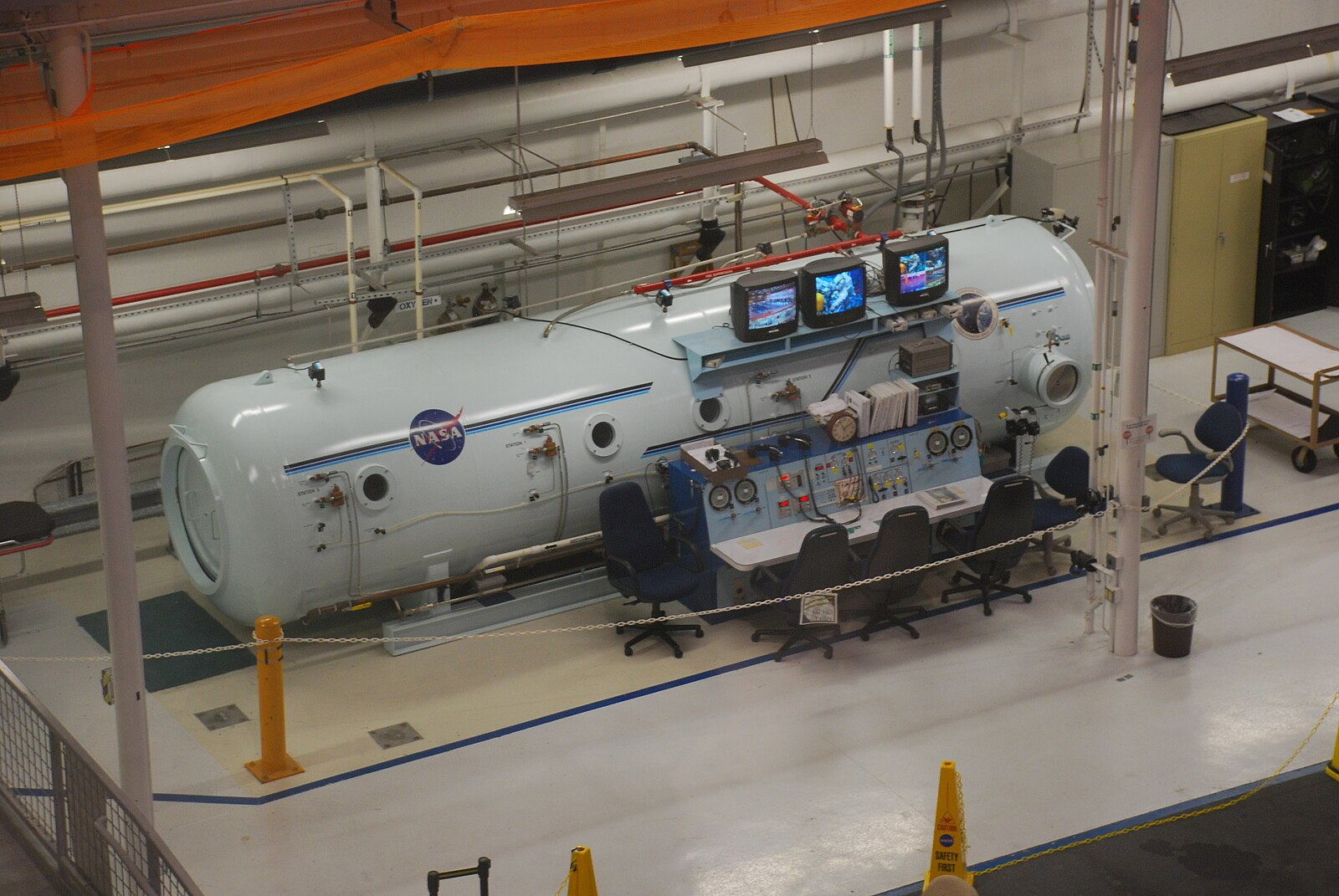
Depending on where it happens the symptoms include skin rash, joint pain, vertigo, and even neurological problems. In severe cases this can lead to death. If you have a hole in your heart (patent foramen ovale) there can be a higher risk of the bubbles moving from the right to left side of the heart, and resulting in a heart attack or stroke. The management of DCS involves administration of oxygen and recompression therapy in a hyperbaric chamber. The idea is to compress the individual to a similar depth to reduce the bubble size, then gradually return them to sea level.
If you take a breath of compressed gas at depth then rapidly ascend without breathing out, you run the risk of pulmonary barotrauma. Because of Boyle’s law (P1V1=P2V2), if you filled your lungs with 6 litres of breathing gas at 10m depth (2 ATA pressure), and ascended to sea level (1 ATA), the volume in your lungs would have doubled to 12 litres, potentially leading to rupture. The gas that escapes can collect in the space between the lungs and chest wall (pneumothorax) or directly into the blood vessels (arterial gas embolism, AGE), travelling into the heart then around the systemic circulation. This can in turn cause a stroke or heart attack. The typical history is of someone panicking underwater, rapidly ascending (perhaps fearing they are low on breathing gas), then losing consciousness upon reaching the surface. AGE can also be lethal. The treatment, once again, involves administration of oxygen and recompression in a hyperbaric chamber.
Unfortunately these bubbles don’t hang around for long. Ideally the autopsy would take place within 24 hours of death, and the best way of seeing gas bubbles is on a post mortem CT scan (PM-CT), but this facility isn’t readily available where I work. Things are also complicated by “off-gassing” where the inert gases dissolved in the tissues from breathing gas at pressure come out of solution when a body is brought to the surface. Gas is also produced as part of decomposition, although this tends to be a slower process in bodies recovered from water due to the cooling effect of submersion.
Why else would someone die?
Other reasons fatalities have occured include poorly maintained equipment, human error, equipment faults, entanglement or entrapment in wrecks, disorientation at depth, and poor judgement. These factors are complicated by narcosis – at high ambient pressures nitrogen becomes narcotic, effectively leading to a diver becoming drunk at depth. As you can imagine, this is less than ideal when you are in an extremely adverse environment, and may (as with alcohol) lead to bad decision making. The difference is wandering out of a pub to find a kebab isn’t as life threatening as drifting away from your buddy and getting lost in the ocean.
Natural disease plays a big role, too. Diving puts your body under an immense strain, and any underlying disease can be made manifest by the adverse conditions. Coronary artery disease that may not cause issues on the surface could end up causing a death at depth. Breathing problems like asthma are also risk factors.
That’s just a primer on the topic, and I might well explore it in future in more…depth?
If you want to know more about hyperbaric medicine, check out DDRC Healthcare (formerly the Diving Diseases Research Centre, based in Plymouth).

 Ordinary Decent Gamer
Leave a comment