
Plymouth has had some stunning weather recently, almost making up for the wet week in Barcelona. That means plenty of time to get the garden organised.


No Knead Bagels (Again!)
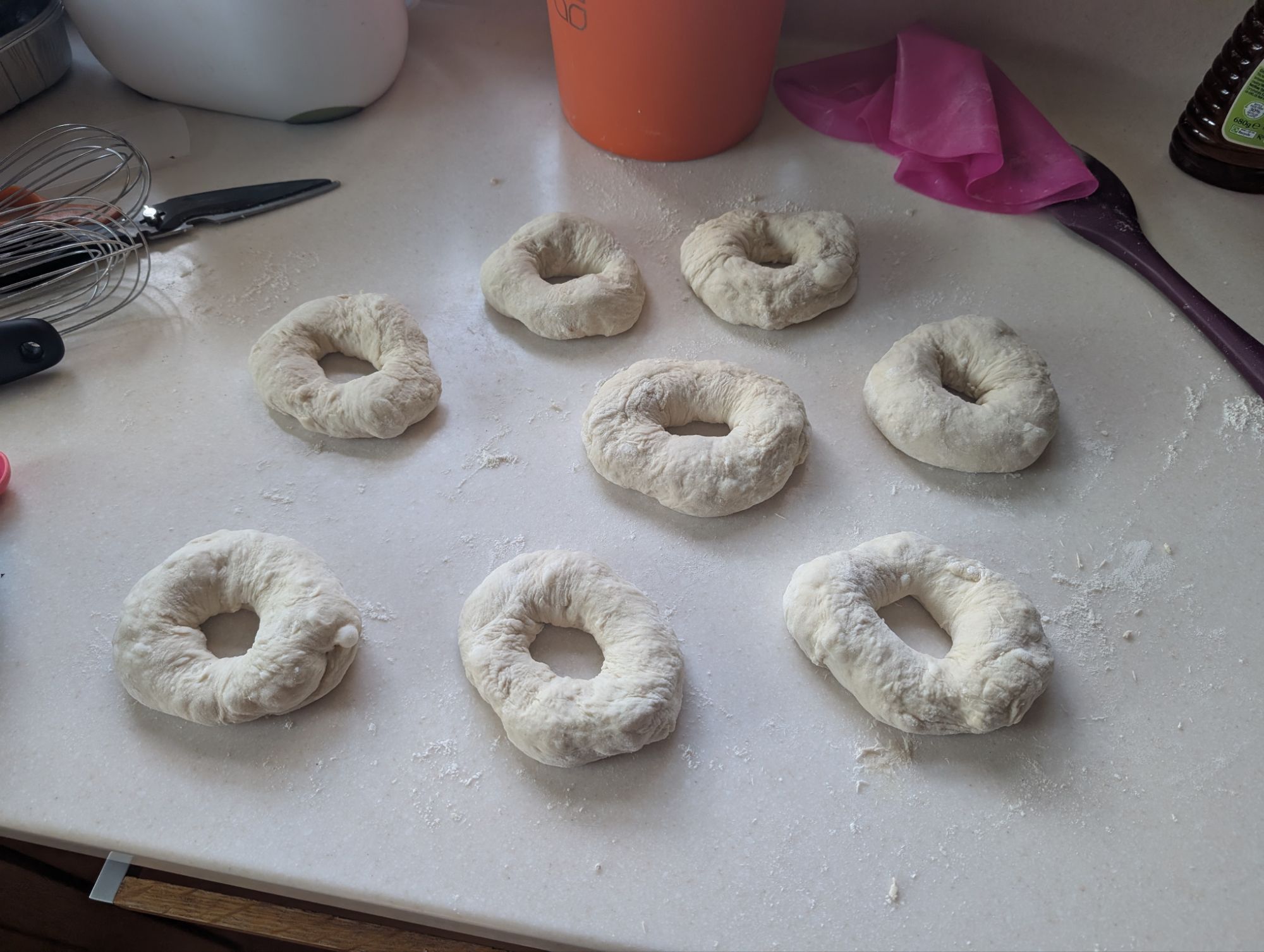
I’ve cracked the no-knead bagel approach which is fairly hands off, adapting a recipe from Sally’s Baking Addiction. The only slightly fiddly bit is the shaping but it’s not bad once you get the hang of it. I use 600g strong white bread flour, 450g water, 2 tsp salt, and 1/2 tsp of instant yeast. Mix the dry ingredients then add the water and give it all a quick mix. Cover the dough and leave it to rise overnight at room temperature. The next morning turn out the dough and knock out the air, then shape it into a ball. Leave that for a second rise for about an hour, then divide it into eight pieces. Use your thumb to make a hole about an inch in diameter (it needs to be bigger than you’d think).
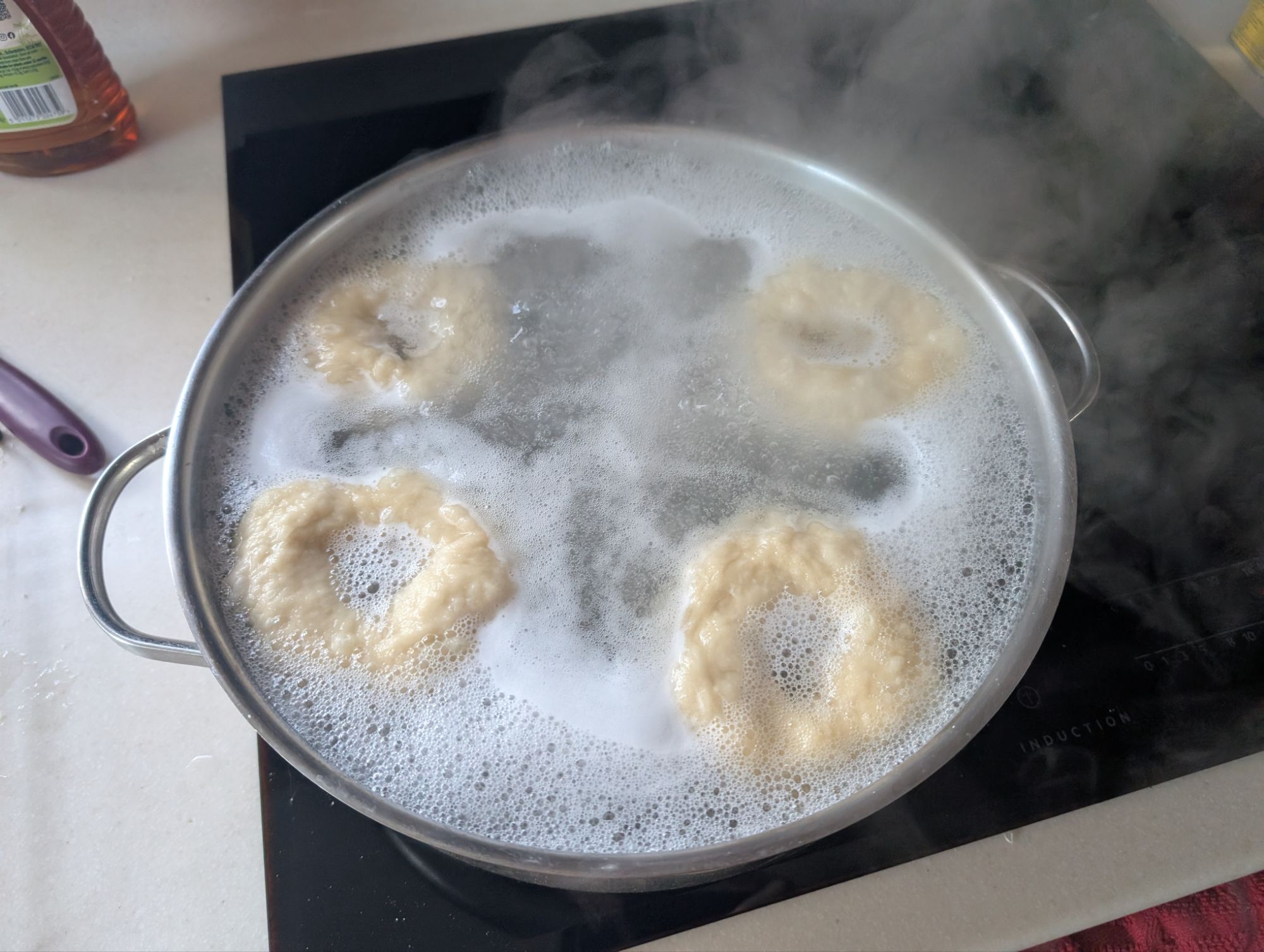
Boil the bagels for a minute on each side in a baking soda solution (amounts vary but I tend to put in a big spoonful of sodium bicarbonate and some sugar). The egg wash is optional but it helps the sesame seeds stick. Bake at 200 degrees C fan (220C conventional) for 20 to 25 minutes, rotating the baking tray half way through. I’m tempted to try flipping the bagels halfway through the process as mentioned in some other recipes.


Rotary Soil Sieve
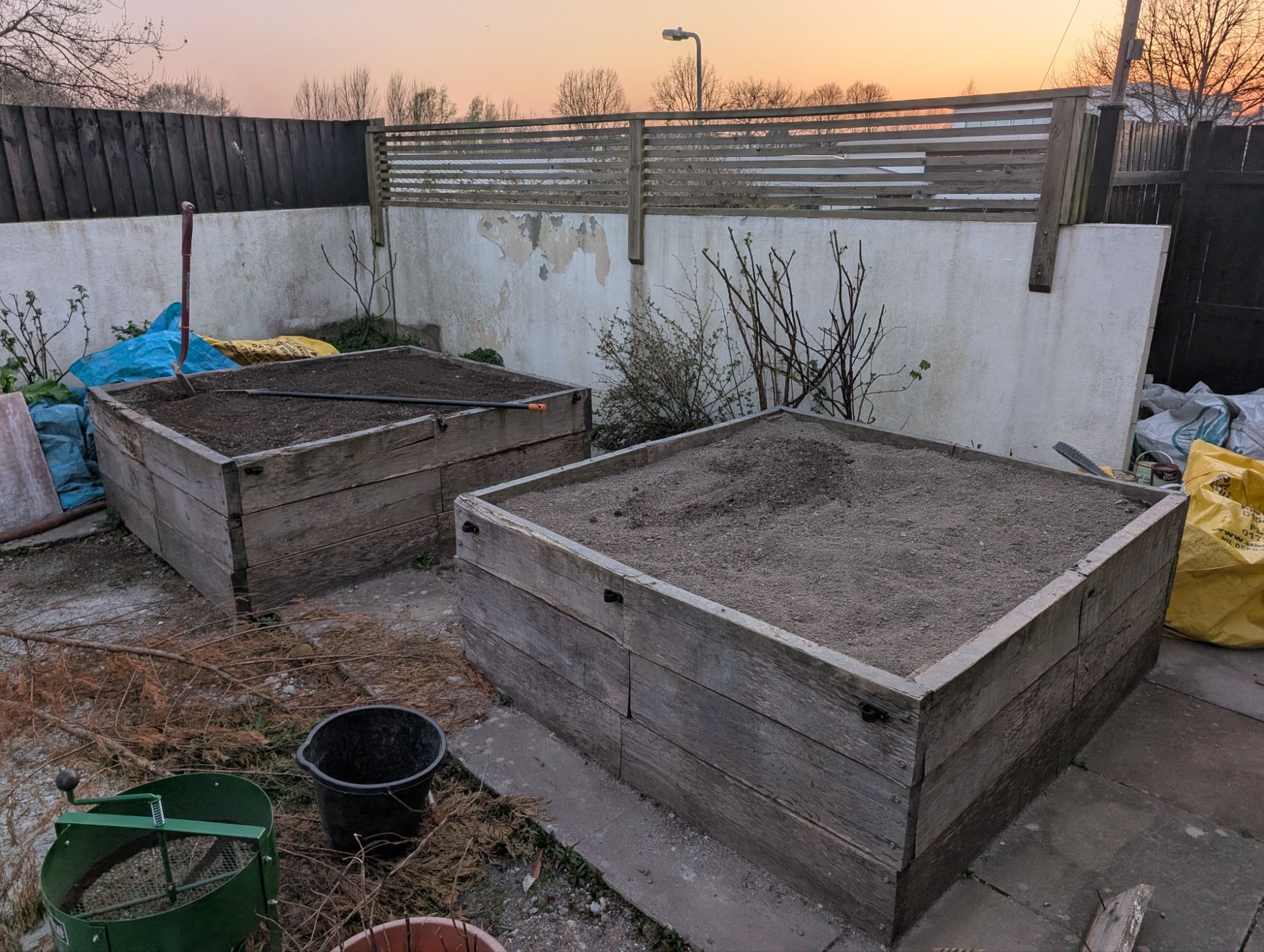
Are you tired of manually shaking a soil riddle/sieve filled full of heavy soil? There is an easier way. Enter the Clarke rotary soil sieve. I looked at a few heavy duty options but settled on a rotary sieve as it was well reviewed despite looking a little small for the intended use. My skepticism quickly washed away as I (close to effortlessly) tore through a bunch of stony soil left over from the shed base excavation. This thing is really heavy duty and well built. The assembly was easy, although I would recommend going against the manufacturers advice (I saw a few reviews to this effect) and secure the screws from the outside. That leaves less to interfere with the rotor. And stick with half filling the sieve as recommended in the manual – it gets bogged down quickly otherwise.


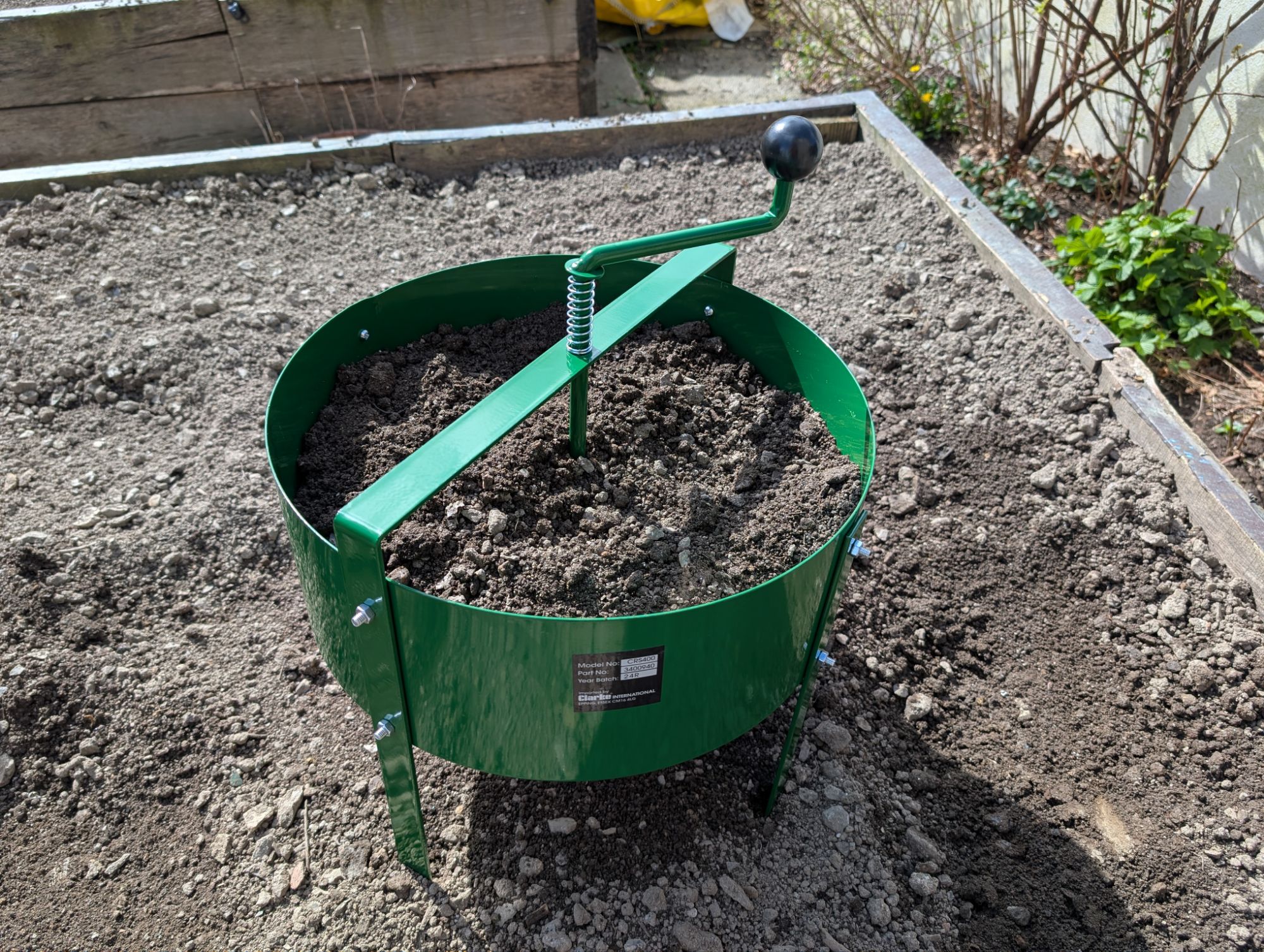
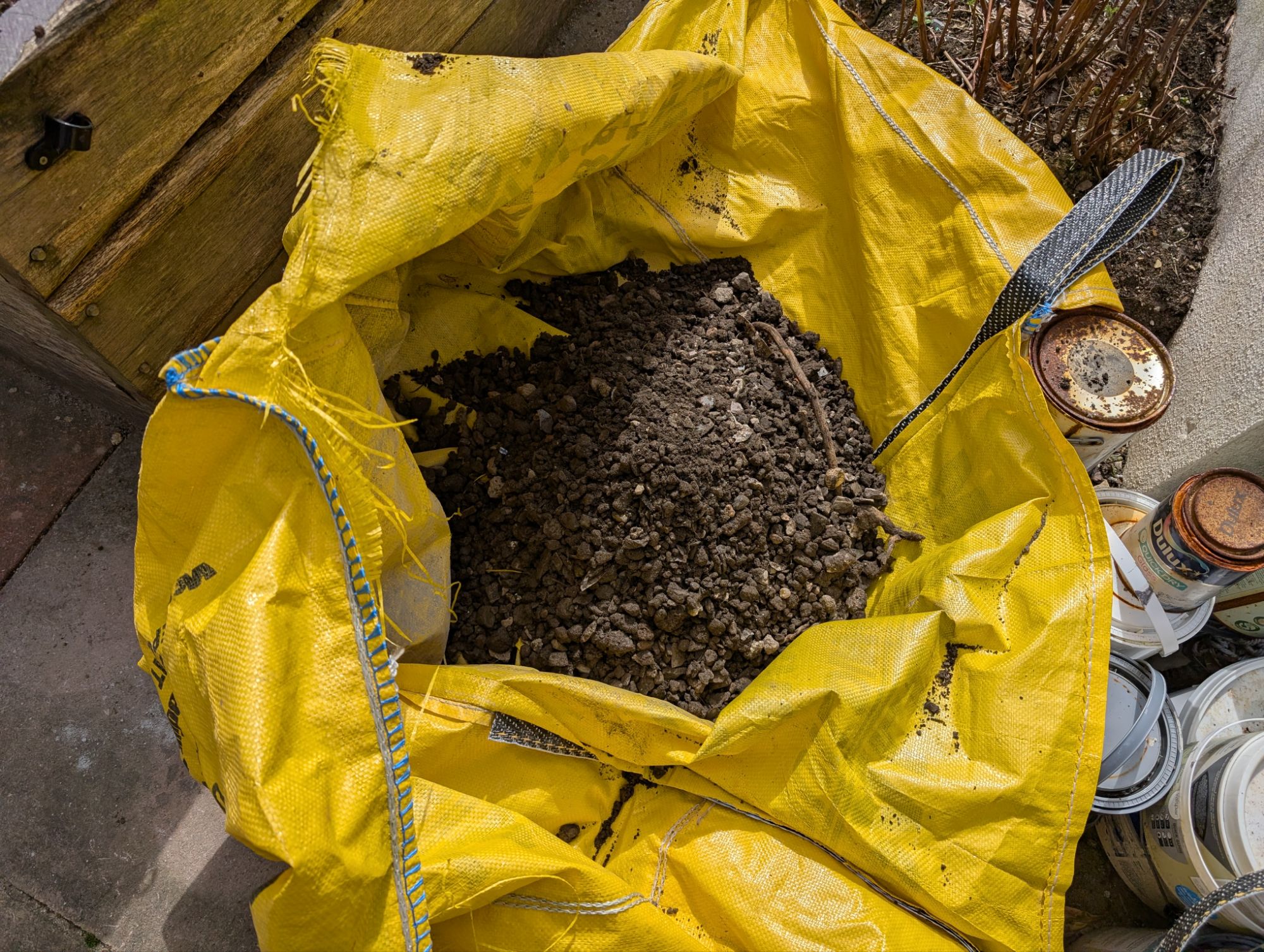
With the rotary soil sieve I was able to turn over a bed’s worth of soil in a matter of minutes compared with the hand sieve. There are still some small stones, but the quality of the soil has been vastly improved. The next step is dig in some compost so the bed is ready for spring planting. Speaking of composting, that brings us onto the next update item.
Bokashi
There are many different methods of composting. Traditional “cold” composting, “hot” composting, worm bins, and bokashi. Strictly speaking, bokashi is not a composting method, but rather a fermentation process that generates a substrate which breaks down much quicker than cold composting. Bokashi started life in Korea, then was popularised in Japan. The method utilises EM or effective microorganisms which ferment the waste.
The process is simple. Add food scraps to the bin. Sprinkle with bran innoculated with microorganisms. Repeat until the bin is full then leave it for a couple of weeks. Bokashi bins tend to be sold in pairs for this reason, so while the first one is doing it’s magic, you can fill up the second. This is my first time attemping it so I will update with the results.


 Ordinary Decent Gamer
Leave a comment